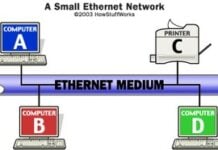




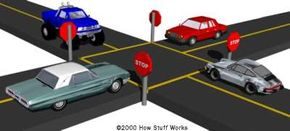
Network hubs are the traffic jams of the digital world. Imagine a chaotic four-way intersection where all drivers must come to a complete stop and yield to other drivers arriving at the same time. Add 12 or even 100 roads and the waiting times become unbearable. Conflicts are not only possible; they are inevitable.
Enter the network switch. It works like a cloverleaf interchange. Instead of forcing all traffic into one congested point, the switch provides a separate exit ramp. Each vehicle can follow its own route to its destination without having to stop and wait for oncoming traffic.
The difference in performance is very noticeable. When you connect devices to a hub, all devices share the same pipe. Bandwidth is split among everyone. If you have 10 devices on a 10 Mbps hub and 2 of them are talking to each other, the remaining 8 devices will compete for the remaining speed. This is a public resource and is often in short supply.
A switch can completely change the game. Each switch port has its own channel. One device connected to the switch port has full bandwidth. Today, the same 10 Mbps network allows each node to communicate at a speed of up to 10 Mbps simultaneously.
A hub is a busy intersection where people wait for their turn. A switch is a set of bridges and ramps that allow traffic to flow freely. You don’t have to yield to cars in the northbound lane just because you want to go south. The path is clear. The speed is constant. No more delays.
Switches provide separate bandwidth for each port, eliminating hub sharing bottlenecks.
This is not just a theory. That’s why the modern network feels so responsive. If everyone is sharing a hub, delays can quickly add up as soon as someone starts downloading a large file. The rest of the network crawls. That download is done independently via a switch. The rest of your office or home network will still work at full speed. The cloverleaf doesn’t just reduce waiting times. The waiting time is completely eliminated.
Does this mean the hub is dead? Almost. They are relics of a slower era. Switches are standard because they give users what they really need: speeds that are independent of nearby activity. The infrastructure evolved from common public areas to a series of private roads. The result is a network that resembles a freeway more than a roundabout.
You may notice the term “collision domain” floating around in older texts. Hubs create large collision domain. Everyone is competing for the same airtime. A switch breaks this. Each port has its own collision domain. This separation allows full bandwidth models to operate. Without it, you’re still waiting at the intersection. With this, all you have to do is drive.
The transition from hubs to switches is essential. It’s like the difference between sharing a lane on a busy bridge and having your own private exit. It gives a sense of delay. The other feels like freedom. This technique works because it no longer treats the network as a single shared space. This is treated as a collection of individual connections. That is how you get speed. That is how you get reliability.
This is not magic. It’s just better engineering. Roads are built differently.