




The digital wave isn’t just crashing into retail. It’s flooding the workshops, too.
Handicraft businesses used to rely on paper ledgers and phone calls. Now, they need software. It’s not optional anymore. Internal administration, sales, and customer service all demand digital support. Without it, you fall behind.
You might think traditional trades are resistant to change. You’d be wrong. The German Handwerk sector is embracing the shift. They know that surviving tomorrow requires integrating technology into today’s workflow.
What Digitalization Actually Means for Tradespeople
Let’s strip away the buzzwords. Digitalization simply means using technology to change how you work and what you work on. In the trade sector, this isn’t a niche concept. It’s everywhere.
Investments are proving this trend. It’s not just talk. Statistics show German craft businesses spent an average of 1,460 Euros in 2016 just on digital tools and devices. That number jumped significantly by 2017. Owners get it now. If you want to stay competitive and attractive to clients, you can’t ignore the digital shift. You have to build it into your operations.
The Time-Saving Reality of Digital Tools
Why do they bother? Time.
Digital tools make you faster. More efficient. More targeted. When you combine modern hardware with the right software, you aren’t tied to your desk. You can manage your business from a job site or a coffee shop.
“Digitalization allows processes to accelerate and be completed in real-time.”
Automation is the hidden win here. Tasks that used to take hours—data entry, scheduling, quoting—now happen in seconds. This frees up your team to focus on the actual craft. The core work.
The benefits clearly outweigh the risks for most businesses. A survey by the Central Association of the German Crafts (ZDH) backs this up. 81% of German craft businesses are open to digital technologies. 69% see it as a genuine opportunity, not a threat.
Moving Beyond the Paper Pile
Traditional craftsmen spend most of their day on the road. But what happens when they return?
If you’re small, you might be doing everything. Accounting. Customer acquisition. Marketing. Material procurement. Inventory. All manually. All on paper.
That era is over.
The era of thick binders and dusty filing cabinets is dead. Sustainability plays a role here, sure. But efficiency is the driver. Companies are moving toward paperless offices because it makes sense. It’s cleaner. It’s faster. And it scales.
Warum die Cloud mehr ist als nur Datensicherung
Wer versucht, seine Werkstatt oder sein Büro weitestgehend papierfrei zu gestalten, bewegt täglich enorme Datenmengen. Einfach alles auf einer einzigen Festplatte zu speichern, ohne redundante Sicherungssysteme zu nutzen, ist langfristig ein Risiko. Die Hardware fällt aus. Die Platte crasht. Irgendwann passiert der Ernstfall.
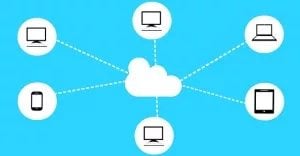
Um nicht in teure eigene Server-Infrastrukturen investieren zu müssen, greifen Handwerksbetriebe zunehmend auf die Cloud zurück. Das Prinzip ist einfach: Die Daten wandern zu einem externen Anbieter. Dort liegen sie auf dessen Servern. Der Zugriff erfolgt über eine verschlüsselte Verbindung. Was bedeutet das für den Alltag? Die Daten sind von der technischen Ausstattung vor Ort entkoppelt. Sie sind dort, wo sie hingehören.
Schutz vor physischem und digitalem Schaden
Der offensichtlichste Vorteil ist der Schutz vor Datenverlust. Wenn die Festplatte im Firmen-PC den Geist aufgibt, sind die Kundenakten in der Cloud noch da. Das gilt auch für Brandschäden oder Diebstahl.
Aber der Schutz geht tiefer. Moderne Cloud-Anbieter bieten oft robuste Sicherheitsprotokolle, die lokale Systeme überfordern. Hackerangriffe oder Ransomware können so abgefangen oder minimiert werden, bevor sie kritische Schäden anrichten.
“Die Daten sind dann über eine sichere Verbindung abrufbar und unabhängig von der technischen Infrastruktur des Unternehmens gesichert.”
Flexibilität vor Ort
Die Cloud macht Daten mobil. Ein Handwerker, der beim Kunden vor Ort steht, hat nicht nur das Werkzeug dabei. Er hat Zugriff auf die Historie der Arbeiten, offene Rechnungen oder geplante Wartungstermine. Das geht über das Smartphone. Über das Tablet. Oder ein mitgebrachtes Notebook.
Das entlastet das Büropersonal. Es muss nicht mehr telefonieren, um nachzusehen. Der Mitarbeiter kann sofort antworten. Professioneller. Schneller.
Digitaler Vertrieb: Die Reichweite im Web
Die Schnittstelle zwischen Handwerk und Kunde ist längst digital. Das Internet ist der primäre Kanal.
Einträge in Telefonbüchern oder Zeitungsanzeiger haben ihre Berechtigung. Sie funktionieren noch. Aber sie decken nur einen Bruchteil der potenziellen Kundschaft ab. Das World Wide Web öffnet riesige Zielgruppen. Ohne massive Medienausgaben.
Wie Handwerker vom digitalen Vertrieb profitieren
- Geringe Einstiegsbarriere: Eine einfache Webseite oder Eintrag in lokalen Suchverzeichnissen kostet kaum Geld im Vergleich zu einer Print-Anzeige.
- Präsenz wenn gesucht wird: Kunden suchen online nach “Klempner in [Stadt]” oder “Dachdecker [Region]”. Wer hier nicht auffindbar ist, existiert für diese Gruppe nicht.
- Automatisierte Vertrauensbildung: Bewertungen, Portfolio-Bilder und klare Dienstleistungsbeschreibungen schaffen Vertrauen, bevor der erste Anruf erfolgt.
Die Digitalisierung im Vertrieb ist kein Trend mehr. Sie ist die Basis. Wer nur auf Mundpropaganda setzt, verpasst den Großteil der Neukundengewinnung. Die Cloud sichert die Daten. Das Internet sichert die Sicht

Most trade businesses already know the drill. You have a website. You’re listed in the yellow pages, or rather, the digital equivalents. The Zentralverband des Deutschen Handwerks (Central Association of the German Crafts) reports that roughly 95% of all craft enterprises now possess their own web page. Nearly 90% have also secured a spot in online directories.
It feels complete. It feels finished.
But look closer at the data. Only about 26% of these same businesses actually show up on social networks.
That gap isn’t a failure of technology. It’s a failure of imagination.
The Cost of Being Invisible
Why does this matter? Because your potential customers aren’t flipping through phone books anymore. They’re scrolling on their phones between meetings. They’re searching on computers during lunch breaks. If you aren’t there, you don’t exist to them.
Ignoring this channel doesn’t just mean missing a sale. It shrinks your entire addressable market. When end-users rely on the internet to find service providers, opting out of the digital conversation is essentially tying one hand behind your back. You’re voluntarily limiting your growth.
The opportunity is massive because the barrier to entry is low. You don’t need a marketing degree to post. You just need to be present where the people are.
Tech That Works in the Field
Here is the reality of the job. You aren’t sitting at a desk. You’re in basements, attics, and construction sites. You’re dealing with broken pipes and faulty wiring.
So how do you stay professional when you’re covered in dust?
Internet-based tools bridge the gap between the chaotic field and a polished office image. These aren’t just fancy apps. They’re survival kits for modern service providers.
Consider the workflow. A technician arrives at a job site. Instead of digging through paper invoices or guessing at part costs, they use a mobile-optimized platform. They pull up the client’s history. They quote the repair in real-time. They send a digital invoice before they even drive away.
“Professionalism today isn’t just about the quality of your work. It’s about the frictionless experience of hiring you.”
This shifts the perception of your business. You’re no longer just the person who fixes things. You’re a modern operator. Customers notice. They trust businesses that look organized, even if the work is messy.
The Friction of Adoption
The hesitation often comes from thinking “I’m not tech-savvy.” That’s a myth. The tools available today don’t require coding skills. They require a smartphone and a willingness to try.
If your competitors are using digital scheduling, automated reminders, and online reviews to build trust while you’re still relying on a paper notebook and a landline, you’re losing on two fronts. You’re losing the visibility of social media and the operational efficiency of modern software.
The tech is ready. The customers are waiting. The only question is whether you’ll show up.
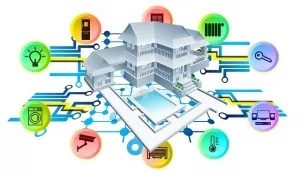
The real shift isn’t just in the backend software. It’s in the hands of the technician. Digital tools are actively changing the physical act of service work. You aren’t just checking boxes anymore. You’re interacting with the system differently.
Consider the heating and plumbing sector. We are seeing a move away from fiddling with physical system controllers. Instead, workers are using apps to commission heating systems directly from their phones or tablets. It makes the job easier. It makes it clearer.
Take the Bosch Easy Service app. It’s designed to work alongside the Bosch Smart Service Key. According to Bosch-Homecom.com, internal testing showed something significant. Using this specific combination can save up to 16 percent of the time required for commissioning a system.
Think about that. That’s not a marginal gain. That’s a whole extra house call per day, or a much less rushed finish on a difficult job.
It’s not just for Bosch units. The Smart Service Key works with Buderus systems too. The interface is different, though. For Buderus, the companion app is called Pro Work. Same hardware. Different software label.
These aren’t gimmicks. They are functional additions. They turn a potentially stressful on-site visit into a streamlined process.
“Internal measurements showed that using the application can save up to 16 percent of the time spent on commissioning.”
The takeaway is straightforward. Digital helpers aren’t replacing the technician. They are augmenting them. They remove the friction. They turn chaos into order.
And they do it without requiring the worker to stare at a clunky interface on the boiler itself. You stand back. You use the tool. You finish the job faster.
Is that progress? Or just convenience dressed up as efficiency?
Either way, the field is changing. And the apps are leading the charge.