



An Ark. That was the name of the play in New York earlier this year. The actors weren’t human. They were prerecorded 3D ghosts. Volumetric. Tethered to Magic Leap 2 glasses strapped to my head. And useless with my prescription. It shouldn’t be this hard.
Snap says they fixed it. Or at least made it worse in better ways.
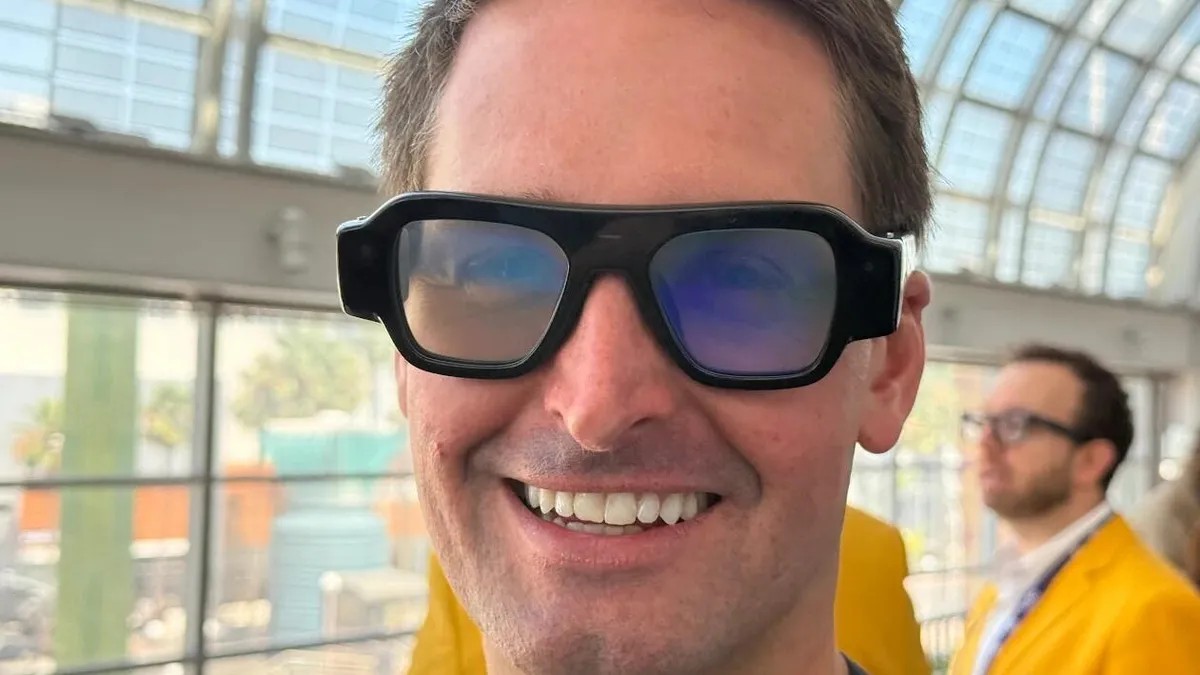
Coming this fall, the Snap Specs. Price: $2,195 They’re big. They’re chunky. They don’t need a phone tether. And maybe—just maybe—they work if you actually wear glasses for vision.
You won’t buy these. Not really. $2,200 for eyewear? Sure if you have three salaries and a trust fund. But here’s the thing: museums will. Theme parks. Pop-up experiences. Places where people pay to look foolish for an hour.
“For the first time in a wearable pairof glasses, computing’s leaving these little rectangle phones… it’s going to be in the World with you.” – Evan Spiegel, Snap CEO
He said this Tuesday. Augmented World Expo. Long Beach. The usual big tech suspects—Meta, Samsung, Apple—are eyeing the same space. Most of them? Junk. Heads-up displays that just show notifications. No depth. No world. Snap has been trying this since the pandemic. I tried their dev versions. They floated 3D stuff around. Like HoloLens did, back when Microsoft had better ideas than hardware sales.
But now? Specs stand alone. Bespoke OS. No Android tether. Just glasses.
Heavy lifting
Is it expensive? Yes. But compare it to the $3,500 Apple Vision Pro or the $1,900 Samsung Galaxy XR. Suddenyl the math isn’t insane.
Size matters. Specs are heavy.
* 47mm size: 132g (4.6oz)
* 52mm size: 136g (4.7oz)
Compare that to Meta’s Ray-Ban Display. It’s already thick but weighs only 70g. Specs are nearly double. They are far lighter than the 2024 dev unit though, which was a lead block at 226g.
Spiegel admits the weight is still there. “I did not think this form factor was possible in 202.” he admitted. He thought we were still five years out. He’s wrong about the future but right about the present. It works. Outdoors, the electrochromic lenses dim. Good for sunlight. Bad for your cheekbones.
Battery? Four hours.
That’s not long. But it’s double the Apple Vision Pro. Double the Quest. Fourteen times better than the dev Spectacles that died in 45 minutes. Spiegel promises it holds up, though obviously draining on graphics and audio. There’s a charging case included. Four charges. 16 extra hours. Total potential: 20 hours of floating digital ghosts in your living room.
Prescriptions matter too. The frames accept inserts. I hope they handle my high myopia. Snap hasn’t confirmed they do yet. Fingers crossed.
Xreal vs The World
Most “AR” glasses out there are tethered crutches. Google and Xreal’s Project Aura arrives soon. It’s a set of glasses that plug into a processor puck. Runs Android. Not something you wear to dinner.
Snap Specs? They use waveguides. Transparent lenses. A 51-degree field of display projected via LCOS chips. Aura has a 70-degree view, but it uses birdbath projectors and Micro OLEDs. You can’t see through it clearly. It feels like wearing a tiny VR headset over one eye. Specs aim for true transparency. Hand tracking controls the UI, same as Aura. But the screen feels more natural, less vertical. Less phone-shaped.
And it’s all processed locally. Inside the arm. Two Snapdragon processors. Snap won’t tell me which chips. Probably old. Probably fast enough for their needs.
The AI crutch
AI does the heavy lifting in software now. Snap runs a custom OS. The chips handle the compute, but the magic happens in the code generation. Spiegel claims AI makes coding lenses for Specs easier. Faster.
They’re hooking into Claude Code and OpenAI Codex. “Agentic” dev tools. Build, test, publish. All automated. 3D assets? Used to take days. Now? Minutes. On the fly.
It works. But it needs the cloud right now. Wi-Fi. Bluetooth. No offline genius yet.
“I think the slightly longer vision is running that process in the glasses themsevles.”
So we’re waiting. Again.
Will it stick?
I don’t care if I buy a pair. I don’t have the neck strength. But I care if an art gallery uses them. I care if a theater does. Jonathan Yeo did a snap-powered exhibit in Paris. Then SXSW. I want to know if it feels real this time. Or if it glitches. Or if I pass out from the weight.
Spiegel thinks people can wear Specs for a whole concert. Maybe an outdoor AR game. Co-locate with friends. Share a ghost. If they can pull that off before Apple figures out their pricing, Snap wins. Not with consumer sales. But with the narrative.
They just might be first.
And really? Isn’t being first in a weird market worth the price tag?
I just want to put them on. Once. See what’s floating there.