

Baseball is physics. Stats. Sweat. So when a digital overlay told 40,000 people in Seattle they’d just seen magic, it felt strange. Not because the tech was bad, but because it worked too fast.
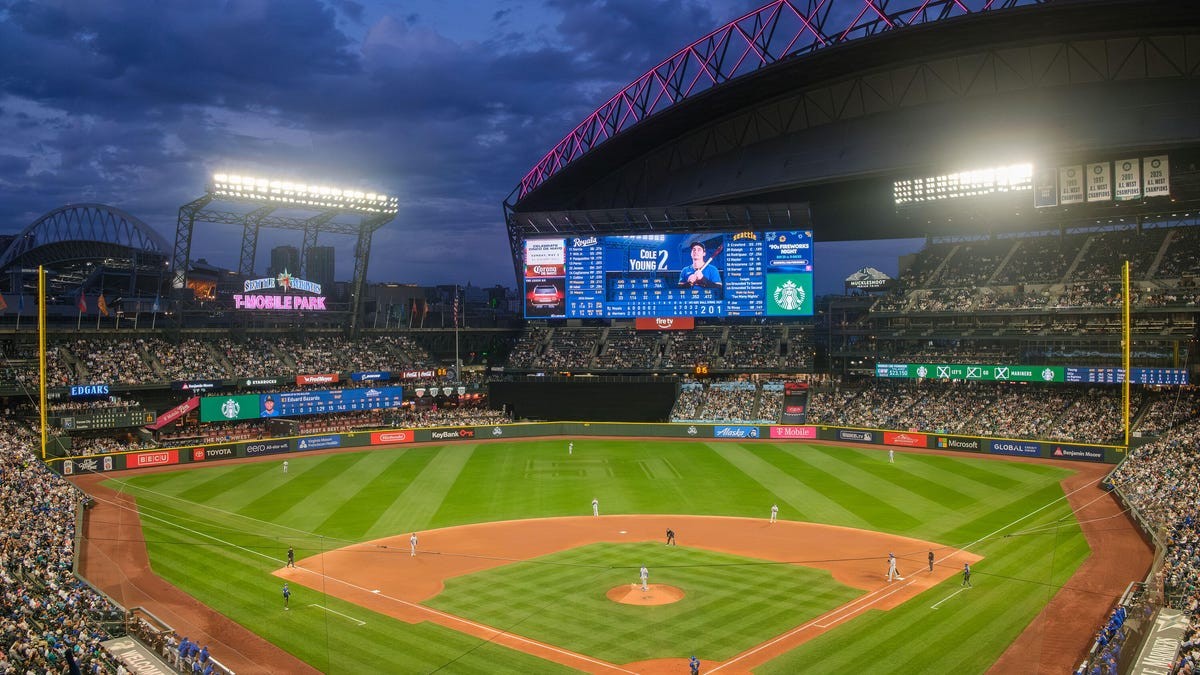
May 1. Kansas City vs Seattle.
Cole Ragans throws a fastball. Leo Rivas swings, misses, gets called out. The crowd groans, or maybe cheers, depends on which side you’re on. But then Rivas does something weird.
He taps his helmet.
Twice.
That’s the signal. Automatic Ball-Strike, or ABS. You’ve got seconds to trigger it. If you miss the window, the call stands. Eyes go to the big screen. An animation loads. Shows the pitch path. Empirical data says the ball nipped the corner. It was a strike.
The umpire was right.
The crowd hated it.
The Tech Behind the Tapp
This isn’t magic. It’s Hawk-Eye. Twelve cameras surrounding the field. Pointing at the mound. Home plate. They track the handoff. The release. The movement.
They talk to each other over a private T-Mobile 5G network. Uses Ericsson Dot radios—little finned discs, dinner-plate size, hiding in the dugout, the press box, the shadows. T-Mobile’s N41 spectrum (2.5 GHz). Less interference. Less noise.
Low latency matters here. 2.3 milliseconds, according to T-Mobile CTO John Saw.
When Rivas taps his head, the system analyzes. Builds a 3D animation. Projects it onto the jumbotron. The goal? Seventeen seconds. They’re averaging 15.4.
Fifteen seconds feels like an eternity. It also feels like nothing.
John Stanton, who owns the Mariners (and helped found what became T-Mobile), said it had to happen. TV viewers saw the box. They saw the balls and strikes in high-def reality. Stadium fans relied on a guy in stripes.
“It undermined the credibility of baseball,” Stanton said.
Bad calls embarrass the umpires. They make fans feel foolish. The fix wasn’t about removing the human. It was about validating them.
Is Data Ruining the Game?
You could argue this kills the spirit. That baseball should be eyes and gut feelings, not algorithms and 5G networks.
Purists bristle.
T-Mobile knew this. Amy Azzi, VP of sponsorships, called it their biggest fear. Would fans reject the tech?
Data says no. 91% say ABS improved the game. 76% liked the experience more.
“This stadium lights up,” Azzi said. When a call flips, the place explodes. It becomes a rally.
Each team gets two challenges. Use it and get it wrong, you lose it. Get it right, you keep it. So if you think the ump blind-sided you on a borderline slider, go for it.
But it adds strategy. Jerry Dipito, Mariners baseball ops, says patience is key now. Don’t just tap because you’re angry. Wait for the moment that flips the game.
“We need to flip the switch at right time,” he said.
Human factor? Still there. Dipito pointed to a Twins game. Minnesota burned their challenges by the sixth inning. By the ninth, Seattle got away with two balls that looked like balls. But Cal Raleigh, their catcher, framed them as strikes. Made them look like the plate ate them up.
“[Raleigh] flipped the game,” Dipito laughed. “He made it look like a strike.”
Technology didn’t save the win that night. Seattle lost 7-6. Five homers. Four ABS reviews. A comeback that fizzled out.
Data tracks the pitch. It doesn’t track the heart. Not entirely.
Maybe that’s fine.