


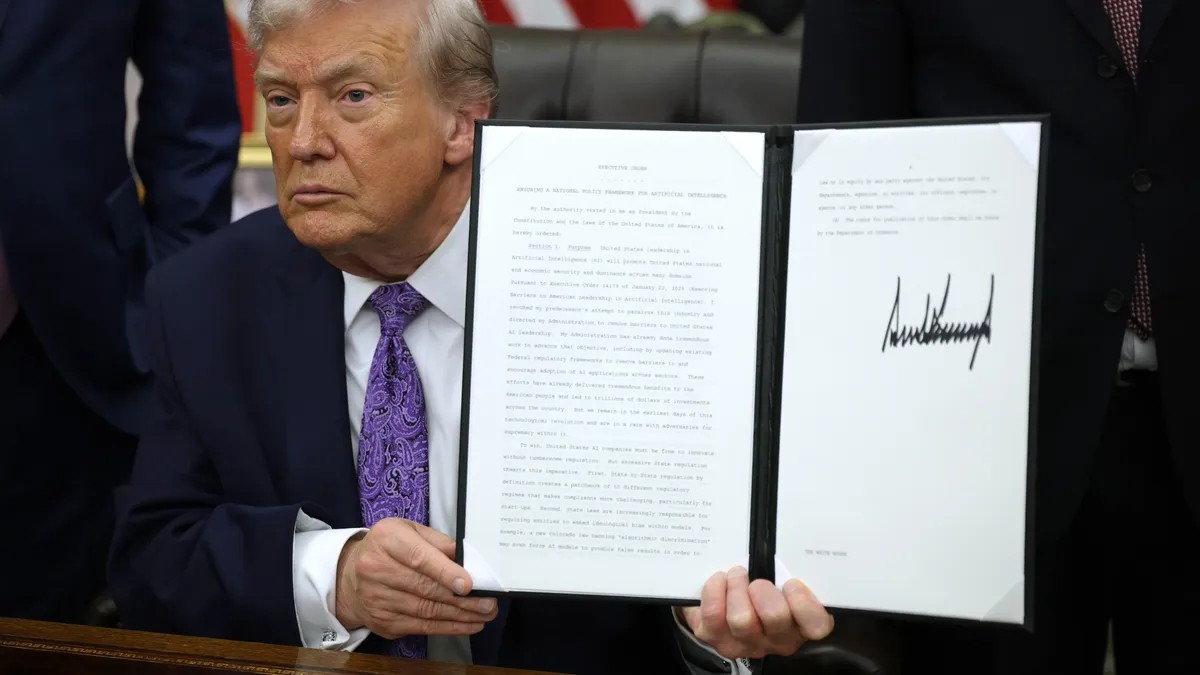
It was a busy Tuesday for OpenAI. First, the new AI executive order landed. Then, Sam Altman showed up on the other side of the table, shaking hands with Donald Trump. By Wednesday, the CEO was also in rooms with Democrats and Republicans in Congress.
He told CNBC it was “very good.” Speaker Mike Johnson agreed. They talked about safety. They talked about cyber tools. They agreed the US should lead. Altman even took to X to praise the order. He called it the right balance.
Is Sam Altman meeting with Trump about the new AI regulation framework?
That’s exactly what happened. Altman’s meeting was less about pleading and more about confirming that the administration’s latest move—the executive order on artificial intelligence—isn’t actually going to cramp anyone’s style.
Here is the catch. The order looks firm. It feels regulatory. It mentions vetting. It lists Anthropic. It lists cybersecurity.
It binds absolutely nothing.
The 30-Day Review That Is Entirely Optional
The White House wants AI companies to submit their advanced models. Not just any model. Frontier models. The big, scary ones that could potentially break things. Anthropic’s Mythos is a prime example—they pulled it because of security concerns.
The rule says submit these 30 days before release. Let the government look at them. Check for insider risks. Check IP protections. Check confidentiality.
But if you look at the actual text, the teeth are filed off.
The order explicitly states: “Nothing in this section shall be construed authorize the creation of a mandatory… requirement.”
You read that right. Optional.
So why do it? The White House hasn’t said. When pressed on what happens if a model fails review, a representative didn’t answer. Instead, they sent out three quotes praising the initiative itself.
How AI Lobbyists Softened the Executive Order
This isn’t the first time Trump has touched AI. He’s been at this since the 2019 American AI Initiative. In 2025? Still the same playbook. Deregulate. Move fast.
But this specific order was supposed to be heavier.
CNN reports the original draft included a 90-day review. Thirty days is much easier for a company rolling out weekly updates. AI companies pushed back. Hard. Anthropic was involved. The timeline got chopped.
Then there was the Commerce Department. An announcement about sharing AI models with the government vanished from the site last month. Gone.
Trump meets these guys. Google, Meta, Microsoft. They shape the policy. Meanwhile, Eric and Donald Jr. are invested in the data centers running the whole shebang. Altman is visiting to discuss implications, sure, but the relationship is transactional. OpenAI, Anthropic, and even SpaceX (via xAI) are all eyeing IPOs. They want enthusiasm, not hurdles.
Voluntary frameworks are not enough. We need a mandatory government pre-deployment process.
— Anthony Aguirre, Future of Life Institute
Aguirre sees right through it. So does John Thickstun from Cornell.
Thickstun called it out. Without enforcement, the order creates an appearance of oversight. It’s theater. It allows the administration to say “we did something” while maintaining a hands-off approach that favors rapid development over safety testing.
Where Does This Leave AI Safety?
The executive order does give agencies 30 days to beef up cybersecurity. The Pentagon, the Treasury—they need to tighten their own defenses. The NSA and Homeland Security get 60 days to create an evaluation framework.
But the framework has no gear to grab onto the tech.
Companies race against China. They race against each other. A model goes out, breaks something, gets patched. Or gets hacked. The “human impact” question hangs there, unanswered by the document.
Sen. Ted Cruz is still pushing for protection from state laws, echoing a federal moratorium that never quite made it into budget bills. The White House released an AI Action Plan this year urging the removal of regulations. It’s a clear signal: speed wins.
Altman said the EO gets the balance right. Safety first. Innovation second. Or maybe, safety first on paper. Innovation in practice.
Who is really checking the boxes when the box itself is voluntary?


