



You cannot type ABC on a laptop or mobile phone QWERTY keyboard. The top row starts with the letters Q, W, E, R, T, Y. This arrangement is called the QWERTY keyboard layout and is not designed for speed or ergonomics. Designed to prevent machine jams.
Chris Latham was a typewriter repairman from Wisconsin who created the first layout in 1873. He worked for the Sholes and Glidden Company. The keys in their prototype were arranged in alphabetical order. The problem is mechanical. Early typewriters used a metal arms to strike the ribbon. If the user types too fast, adjacent arms can collide and get stuck. Latham mixed letters and separated letters that were often combined. This forces the typist to slow down. Machines can catch up.
This design is not the only solution. Other layouts also exist. Dvorak Simplified Keyboard moves the most frequently used characters to the home row. Faster typing speed and less stress. However, it never caught on. Why? This is because the market has standardized on QWERTY.
The myth of QWERTY superiority
QWERTY is still considered by many to be the most efficient layout. They believe this reduces the distance the fingers can travel. Research shows that this is mostly a myth. Studies comparing QWERTY to other layouts such as Dvorak and Colemak have shown that the difference in speed is negligible for the average user. The main advantage of QWERTY is familiarity. Everyone learns it in school. Switching requires retraining. Most employers do not cover these costs.
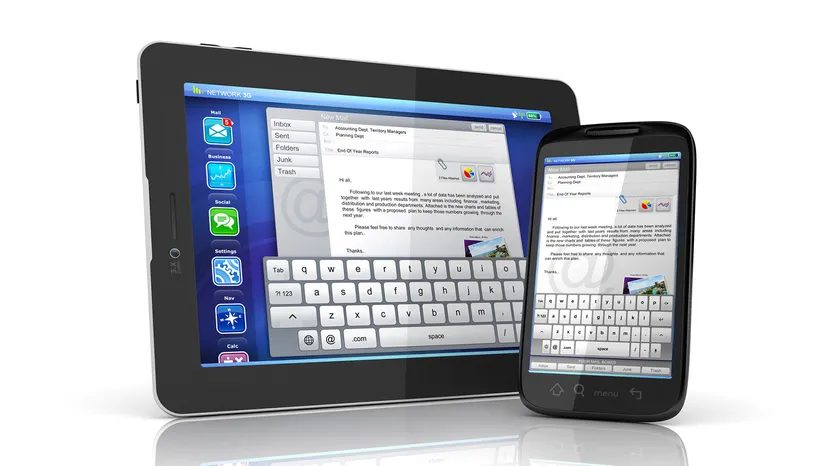
Layout also affects how you use your digital devices. In smartphones, the virtual QWERTY keyboard dominates. It’s small. It is very narrow. Anticipatory text can help, but physical limitations remain. Voice-to-text is increasing. It bypasses the keyboard entirely. This change may eventually challenge QWERTY’s dominance. However, it is the default for now.
Why it matters to modern users
You don’t need to learn new layouts to better typing practices. Understanding the history of the QWERTY keyboard layout can help you understand why certain habits persist. It also explains why ergonomic keyboards exist. They are trying to address the stress caused by design choices made decades ago.
Some users use a split keyboard instead. They believe it can relieve wrist pain. Others use alternative layouts, such as Colemak. Most letters are kept, but vowels and common consonants are moved. The learning curve is steep. The rewards are small. If you write all day, this might be worth it. If you write your email every now and then, probably not.
The question is not whether QWERTY is perfect. It’s whether you want to change. Most people don’t. Inertia is too strong. The layout is embedded in education, software and muscle memory. This is a historical artifact that will never go away. This is not a fault. This is how technology develops.
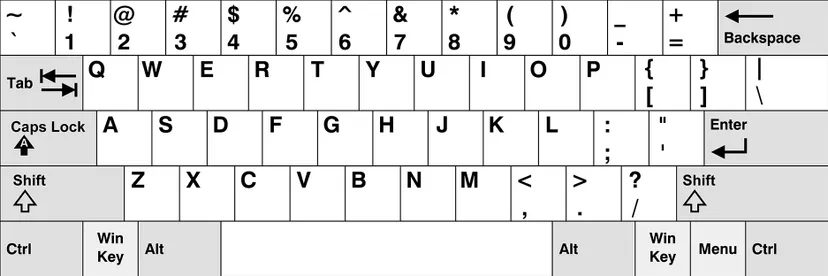
The #QWERTY myth and the rise of the Dvorak keyboard
The first commercial typewriter rolled off the Remington & Sons production line in 1874. It’s called the Sholes and Glidden typewriter, but industry insiders call it the Remington No. 1. The hardware is based on a mechanism invented by Christopher Latham Sholes and Carlos Glidden. Samuel Soule also has a patent for the model. When cash was tight, Sholes turned to his old business partner James Densmore for help. Densmore intervened and bought out Glidden and Soule, encouraging Sholes to improve the prototype.
Manufacturing requires a factory. Densmore and his partner George Washington Yost found one at E. Remington and Sons. After the Civil War, the company struggled. Gun sales have collapsed. Remington shifted its focus to sewing machines. A typewriter is very similar to a sewing machine. They agreed to build it.
The original keyboard was not QWERTY. They are arranged in alphabetical order. Two rows. Simple.
The Remington Number 1 came on the market with this layout. The QWERTY layout was patented only in 1878. By then, the machine was already in use.
The mechanics are brutal. Each key is attached to a metal rod. When you press the key, the wand swings forward. It hit an inked ribbon. The ribbon is pressed against the paper. The paper is behind the tape. The bar swings back. repeat.
Jamming is inevitable. Mr. Sholes noticed the mistake immediately. Type fast that the bar doesn’t have time to reset. They crashed into each other. The machine locked up.
According to legend, Sholes designed the QWERTY keyboard to slow people down. Put common letters in hard-to-reach places. Force typists to use weaker fingers. Prevent jams.
That story is likely wrong. Densmore may have invented QWERTY. The layout separated common two-letter combinations. Placed them on opposite sides of the keyboard. Or between the hands. It’s all about efficiency. Not prevention.
Why QWERTY survives
People didn’t just accept the layout. They analyzed it. They are looking for better options. The debate started almost immediately.
The core question wasn’t just about speed. It’s all about muscle memory. When typists learn QWERTY, switching can be a pain. Manufacturers stuck with it. This is followed by training materials. The ecosystem locked in.
The Dvorak Keyboard Layout
1930 年代には、別のアプローチが登場しました。 オーガスト・ドヴォルザーク博士とウィリアム・ディーリーは、その分野での効率を優先したキーボードを設計しました。 ほとんどのバッティングは中列で行われます。 上の行と下の行では処理できる文字数が少なくなります。 目的は指の動きを減らすことです。
この理論は健全です。 メイン行には、最も一般的に使用される英語の文字が含まれています。 ドヴォルザークは母音を左手に置きました。 子音は右側にあります。 交互の手。 クロスオーバーを最小限に抑えます。
Does Dvorak Actually Work?
Studies show mixed results. Some tests indicate faster typing speeds with Dvorak. Others show no significant difference. The data depends on the sample size. and the length of the exercise.
Learning Dvorak takes time. Typists need to forget years of QWERTY-shaped muscle memory. The transition period slows things down. For many people, the long-term benefits are not worth the short-term pain.
Where are you today?
QWERTY remains normal. Built into every physical keyboard. Every software emulator. Any coding standard. Dvorak is located in the settings menu. This is a choice. Niche choice.
The reason is not technical superiority. This is inertia.
You can make the switch today. It comes a month late. Then maybe it’s faster. Or maybe not. Modern laptops don’t have the uninterrupted typing experience that Sholes was concerned about. But the ghosts of 1874 mechanisms still exist in the layouts we use to write code, draft emails, and hack the Internet.
Is this the best layout? Probably not. Is it the only one? no longer. But it’s you
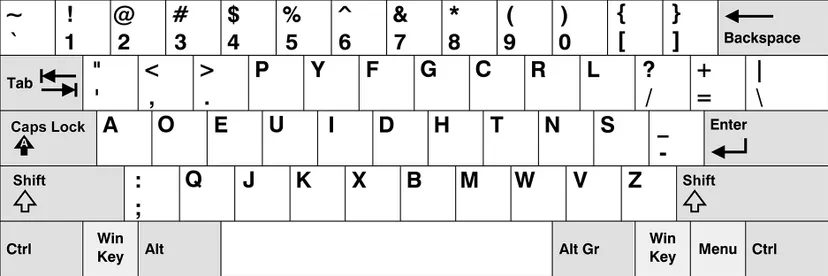
August Dvorak was more than just a academic with a pipe. By the 1940s, he had become a Lieutenant Commander in the US Navy Reserve. Previously, he led research at the University of Washington. He didn’t just guess about typing efficiency. He gathered engineers. They analyzed 250 different keyboard variations. QWERTY was in the mix. What is the conclusion? This is one of the worst designs ever.
The data was damning. More than half of the typing work on a QWERTY keyboard is done with your left hand. Many common words require you to do all the work with your left hand. Most people are right-handed. Dvorak considered this a fundamental mistake. The non-dominant hand was overburdened. The engineers also tracked finger movement. The fingers always move away from the “home” row to reach the farthest keys. You can write over 3000 words using only your weak left hand.
The Ergonomic Logic Behind the Dvorak Simplified Keyboard
Dvorak didn’t just complain. He built a solution. He patented the Dvorak Simplified Keyboard (D.S.K.) in 1936. His approach is rooted in hard science. He looked at the density of the letters. He analyzes the frequency of occurrence of certain words in texts. The goal is simple. The goal is to minimize the movement distance of the fingers.
This model distributes the workload evenly. The load is divided evenly between the left and right hand. Efficiency is the name of the game. In the Dvorak keyboard layout, the most common characters are on the right side of the home row. Fingers don’t need to dart away. The left hand handles all vowels and consonants near them. The right hand sticks to consonants.
This balance is strict. There are very few English words in Dvorak that can be written with one hand. There are only two of them: “papaya” and “opaque”. Compare to QWERTY. Words like “pumpkin” and “minimal” look amazing on the other hand in a standard layout. Try them. It feels unnatural in Dvorak. It feels natural on QWERTY. This is a trap.
Is a Dvorak keyboard better than a QWERTY keyboard?
In his article “There’s a Better Typewriter Keyboard”, Dvorak refers to QWERTY as “the so-called standard keyboard”. He probably would have been miserable to know the American National Standards Institute later certified QWERTY as the actual standard for computer keyboards. Even worse, the ISO standard layout preserves the central order of QWERTY and only adds phonetic symbols from other languages.
The argument for Dvorak isn’t just about comfort. It’s all about raw speed. But the evidence is not clear. This was directly confirmed in a 1956 report by Dr. Earl P. Strong, funded by the US General Services Administration. Faster and more accurate than typists retrained at D.S.K. Only during long training sessions. The difference has disappeared for a moment. What was Strong’s verdict? The conversion is not worth the investment. New equipment costs money. Retraining takes time. The ROI is negligible.
To see for yourself, change your computer’s operating system settings to switch your keyboard to the Dvorak configuration. Depending on your keyboard, you can also swap keys and rearrange them in the Dvorak layout.
The obstacles are not technical. This is inertia.
Other keyboard layouts
Dvorak is just an option. This is not the only non-QWERTY layout. There is QWERTZ which is popular in Central Europe. AZERTY, used in France and parts of Africa. The keyboard adapts to your language needs. The Spanish keyboard uses QWERTY technology, but in addition to the Ñ key. The physical form remains the same. The map changes.
History of the QWERTY standard
The current standards were not born from ergonomics. It comes from mechanics. Christopher Sholes invented the Remington No. 1 in 1874. This was the first commercial typewriter. Sholes also implements a QWERTY layout. Why? Mechanical blockage. Early prototypes had crash bars. Input columns become complex when character pairs are used frequently. Shore circulated a general letter. He set the lock to prevent a collision. This is a fix for a machine problem, not a human problem.
Is Dvorak better than QWERTY? In theory it is. Actually no. The authors achieved roughly the same speed with both layouts. The ergonomic benefits are real. For the average user, the increase in speed is not statistically significant. Switching costs are high. Network effects are more powerful. Everyone uses QWERTY. That’s why everyone uses QWERTY.
Before QWERTY, typewriters used a different mechanism. The text is at the end of the bar. When you press the key, the rod rotates on the tape strip. Impressions were written on paper. This is awkward. Shores design is simpler. It won the market. Ergonomics is lost.
We are still limited to writing by the mechanical limitations of the 19th century. 2024. It works. Very familiar. Too bad for little fingers. But to change that, simply improving the design is not enough. Immediate change is needed from everyone. That never happens.
So keep writing. Left hand lifts heavy. The bar is no longer crowded. It just creates a carpal tunnel.