




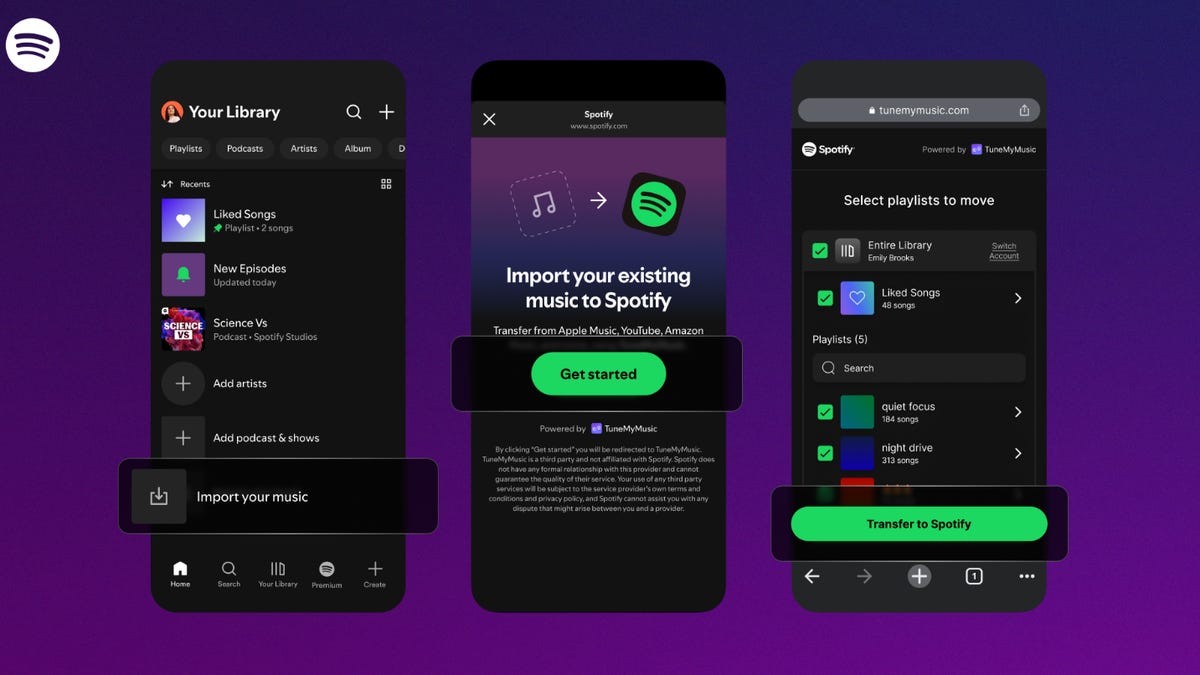
Spotify just made a major move to lock in users and simplify music organization by rolling out a direct playlist import feature. For the first time, Spotify users can seamlessly transfer playlists from competing services – including Apple Music, YouTube Music, Amazon Music, Tidal, Deezer, Pandora, and SoundCloud – directly into their Spotify libraries. This is a big deal because it eliminates the tedious work of rebuilding playlists from scratch when switching platforms.
Why This Matters: The Frictionless Music Experience
Previously, migrating to Spotify often meant hours of manual playlist recreation or relying on unreliable third-party tools. Now, Spotify handles the entire process. The feature is powered by TuneMyMusic, a long-standing service for playlist transfers.
This isn’t just about convenience; it’s about Spotify strengthening its ecosystem. Once playlists are imported, they immediately feed into Spotify’s recommendation algorithms (Daylist, Release Radar, etc.), making personalized suggestions more accurate. The more data Spotify has, the better it can tailor the experience to individual listeners.
Unlimited Transfers & Deeper Integration
Unlike some free playlist migration tools that cap the number of songs or playlists you can transfer, Spotify’s in-app solution has no limits. Beyond simply importing, Spotify allows users to collaborate on imported playlists, design custom cover art, and add transitions between songs (for Premium subscribers).
The original playlists remain untouched on the source platform. Spotify copies the content; it doesn’t delete or alter the original version.
How to Transfer Your Playlists
The process is straightforward:
- Open the Spotify mobile app.
- Navigate to “Your Library.”
- Scroll to the bottom and tap “Import your music.”
- Follow the prompts to connect to TuneMyMusic, authenticating your source music service account.
- Select the playlists you wish to transfer.
Once completed, your imported playlists will appear in your Spotify “Playlists” list.
This new feature removes a key barrier to entry for Spotify, making it even easier for users to consolidate their entire music collection within a single platform. It’s a smart move that will likely drive further engagement and data collection for the streaming giant.