



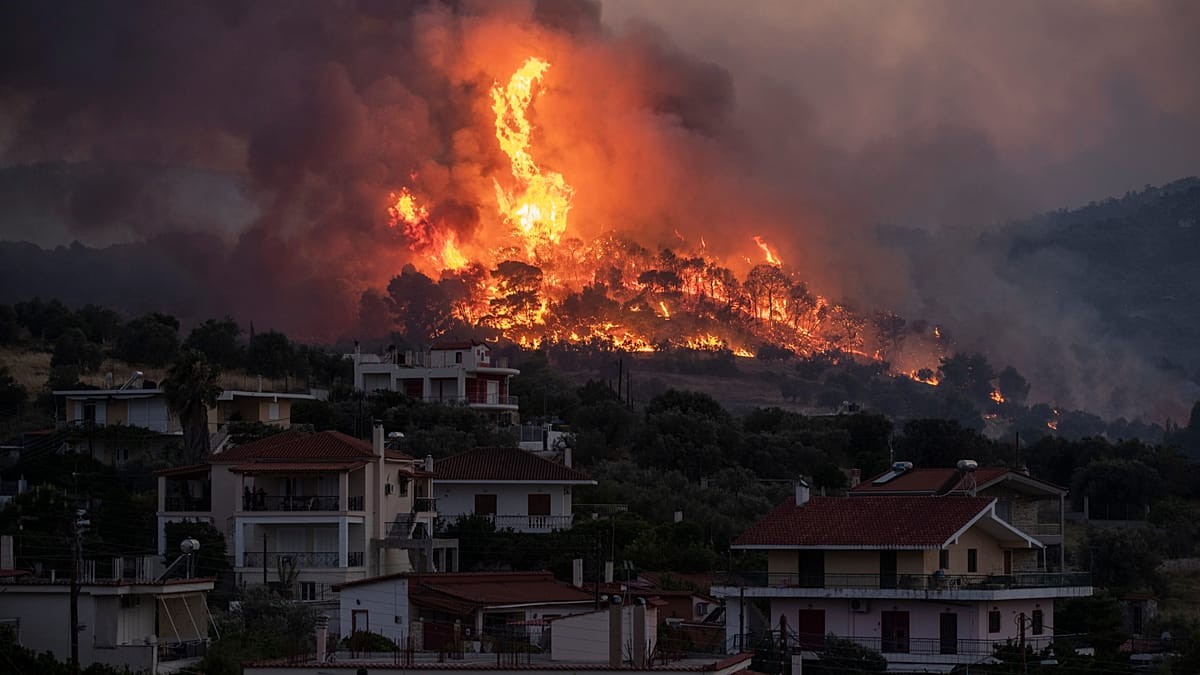
Another tough season. You can smell the smoke already. Greece knows the drill.
But this time there’s a new layer of defense hanging in space. Four small satellites. About the size of a microwave. They launched in May into low Earth orbit. Greece just became the first country on Earth with a satellite group dedicated entirely to fighting wildfires.
No more waiting for smoke columns to reach urban centers.
The AI Behind The Eyes In The Sky
Conventional satellites miss a lot. They need fires big as cruise ships to register a signal. That’s too late. These OroraTech cubesats have thermal sensors. They see hotspots as small as four meters. That’s the size of a garage. Or a small shed.
Ioannis Landouris, CEO of OroraTech, breaks down the flow.
“We scan an area… send them to our AI models… analyse them with precision… determine whether it is a fire… pass this information… to the fire service.”
It sounds robotic but the speed matters. Incident commanders get an alert instantly. Location. Size. Intensity. If three fires break out at once real-time data tells you where to put the crews. You aren’t guessing.
Imagine being on the ground. You have a tablet. You see the risk vectors. “If I move crews here the fire likely heads there.” You run simulations. You forecast the spread. You make calls before the flames change the map.
Critical Periods Require Critical Tech
Dimitris Papastergiou, the Minister of Digital Governance gets it. Summers in Greece are brutal. Wildfires are standard fare.
Here is the thing about cities. People see the smoke. They call 911. The alert system works because eyes are everywhere. But national parks? Remote forests? No neighbors to spot the flame. The satellites see those hidden starts immediately. Thermal cameras pick up the heat.
Does this replace human judgment? Not really. But it sharpens it.
False alarms happen. Sun-baked rock looks hot. Overheated factory roofs register heat. Even solar panels can confuse the sensors. The AI filters them out. By the time the Fire Brigade gets a ping it’s probably fire.
Zisoula Dasiou, Fire Brigade Commander stresses the clockwork nature of the system. One update per hour. Every hour. No gaps. This constant stream feeds the prediction models. You know where the fire is moving every sixty minutes.
€200 Million Worth of Eyes
The price tag sits at €200 million. The European Union foots the bill. Launch costs have dropped. Manufacturing gets cheaper every year. The economics finally align with the technology.
The program finishes by year’s end.
It’s a shift. Not just in Greece. A signal to the rest of the world. Technology doesn’t fight fire directly. But it changes when you find it. And that margin… that margin is everything.
What happens next isn’t quite decided.