



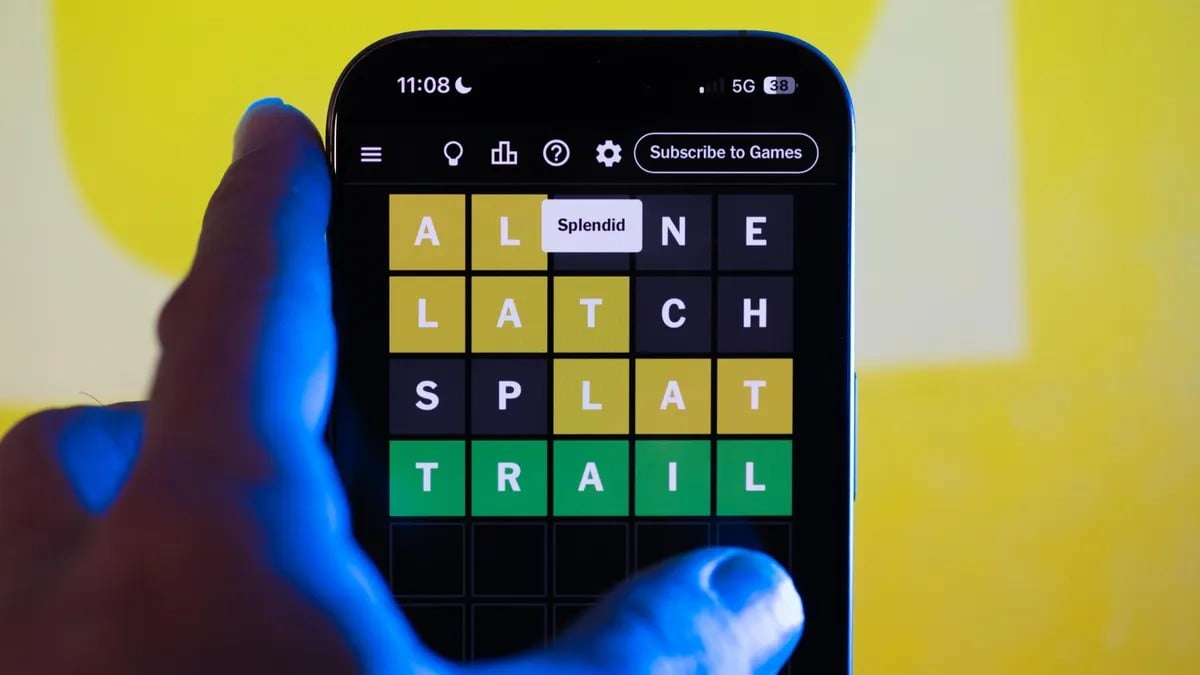
The daily ritual of solving a five-letter word has evolved from a niche hobby into a global phenomenon. Since Josh Wardle launched Wordle in 2021—and its subsequent acquisition by The New York Times in 2022—the game has defined a generation’s approach to casual gaming. The rules are simple: guess the word in six tries, guided by a color-coded feedback system of gray, yellow, and green tiles.
However, for many enthusiasts, one daily puzzle is no longer enough. The market for word-based brain teasers has expanded rapidly, offering everything from adversarial challenges to multi-word marathons. Whether you are looking for a change of pace, a harder difficulty curve, or simply more words to solve, here are ten alternatives that capture the spirit of the original while offering distinct experiences.
The New York Times Ecosystem
For those who already subscribe to The New York Times digital bundle, the publisher has expanded its puzzle portfolio beyond Wordle. These games share the same high-quality production values and daily release schedule.
Connections
If Wordle is about spelling, Connections is about semantics. Players are presented with a grid of 16 words and must sort them into four categories of four. The twist? The categories range from obvious to obscure, requiring lateral thinking rather than just vocabulary knowledge.
- Difficulty Levels: The game uses a color-coded system to indicate difficulty: Yellow (easiest), Green, Blue, and Purple (most challenging).
- Strategy: It mirrors the logic of the BBC quiz show Only Connect, rewarding players who can spot subtle linguistic links.
- Access: Requires a New York Times subscription (starting at $1/week).
Strands
Strands shifts the format from guessing to searching. Resembling a traditional word search, this daily puzzle presents a grid of letters and a hidden theme. Players must find words that fit the theme, which can appear in any direction—including diagonals, backwards, or even in “L” shapes and zigzags.
- Key Mechanic: Every letter in the grid must be used. Once all theme words are found, the remaining letters spell out the “spangram”—a word that spans the entire grid and reveals the theme.
- Access: Requires a New York Times subscription.
Platform-Specific Exclusives
Some of the most innovative word games are tied to specific hardware or service ecosystems, offering unique interfaces not found on the open web.
Quartiles
Exclusive to Apple News+ subscribers on iOS 17.5 and later, Quartiles offers a tactile, tile-based experience. Players are given 20 letter tiles and must arrange them to form words.
- The Goal: The objective is to find four-letter words, known as “Quartiles.”
- The Challenge: The game is designed to be difficult, often requiring players to break down longer potential words into smaller, valid quartiles. It mimics the satisfying “tip-of-the-tongue” moment of recalling a forgotten word.
- Access: Requires an Apple News+ subscription (starting at $13/month).
The Multi-Word Marathon
For players who find the standard six-attempt limit too easy, a series of spinoffs has emerged that multiply the workload. These games retain the core Wordle mechanics but increase the cognitive load by requiring simultaneous solutions.
Dordle, Quordle, Octordle, and Sedecordle
These free, web-based games challenge players to solve multiple words at once using the same set of guesses.
- Dordle: Two words to solve simultaneously.
- Quordle: Four words.
- Octordle: Eight words.
- Sedecordle: Sixteen words.
Why this matters: These games test not just vocabulary, but strategic resource management. A guess that helps solve one puzzle might be useless for another, forcing players to prioritize which letters to eliminate first. They are entirely free to play in any web browser.
The Adversarial and Inverted Challenges
Not all Wordle clones follow the standard rules. Some games invert the objective or introduce an opponent, creating a dynamic that feels less like a puzzle and more like a battle of wits.
Antiwordle
In Antiwordle, the goal is reversed: you want to avoid guessing the word correctly for as long as possible.
- How it works: You start with all letters available. As you guess, letters turn red (locked in place), yellow (in the word but wrong spot), or gray (not in the word).
- The Win Condition: You win by using every letter on the keyboard without completing the word.
- Difficulty: Counterintuitively, many players find this harder than the original because it requires deliberately avoiding common patterns.
Absurdle
Absurdle bills itself as the “adversarial version” of Wordle. Instead of a static secret word, the game dynamically changes the target word based on your guesses to keep you guessing for as long as possible.
- The Mechanism: With each guess, Absurdle reveals the minimum amount of information necessary. It may even change the secret word if your guess would otherwise solve it too quickly.
- Strategy: There is no “correct” word at the start; the game narrows down its options in real-time. The best possible score is four guesses, but most games last much longer.
Niche and Thematic Variations
Finally, some variants cater to specific tastes, ranging from the profane to the purely linguistic.
Lewdle
As the name suggests, Lewdle is Wordle with a mature twist. It uses the same green-yellow-gray feedback system but focuses exclusively on rude, vulgar, or obscene words.
- Content Warning: The game ranges from mild slang to strong profanity. However, it explicitly excludes slurs or hate speech.
- Appeal: It offers the same daily dopamine hit as Wordle but for players who find standard vocabulary games too tame.
Note: While the original text mentioned ten games, only eight were detailed (Connections, Strands, Quartiles, the four Multi-Wordle variants counted as one category, Lewdle, Antiwordle, and Absurdle). The list below summarizes the key takeaways for a complete gaming toolkit.
Conclusion
The popularity of Wordle has spawned a diverse ecosystem of puzzle games that cater to every type of brain teaser enthusiast. From the semantic depth of Connections and the grid logic of Strands to the strategic overload of Sedecordle and the adversarial nature of Absurdle, there is no longer a single “right” way to play. Whether you prefer the comfort of a New York Times subscription or the free, chaotic challenge of browser-based spinoffs, the daily word puzzle ritual is alive and well in 2026.