


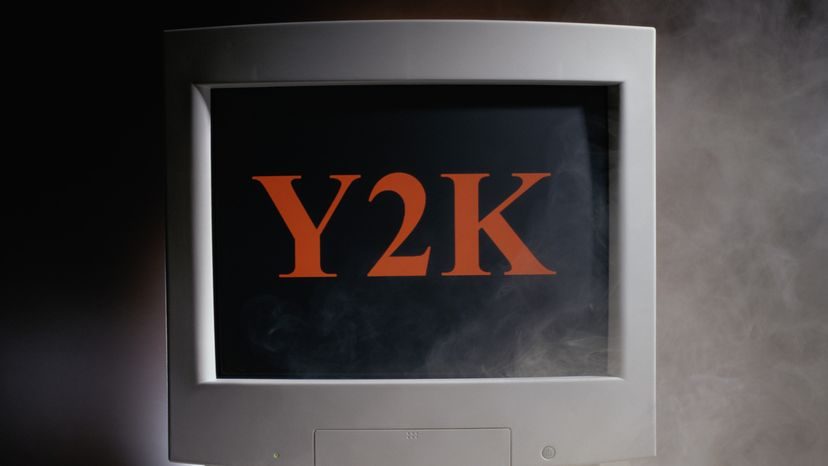
You probably remember the noise. If you were online in 1999, you were bombarded with warnings. The internet was awash in doomsday rhetoric. Mainstream media treated the turn of the millennium like a ticking time bomb. Everyone was talking about the Year 2000 problem. But if you look back at the chaos now, the panic seems almost absurd. What was the actual issue? It wasn’t a magical apocalypse. It was a simple quirk in how programmers handled dates.
How the two-digit year caused calculation errors
The root cause was laziness, or perhaps thrift. For decades, computer code used only two digits to represent the year. You see this everywhere in legacy systems. An expiration date on a file might look like 08/31/99. Programmers did this because it saved storage space. Hard drives used to be tiny and expensive. Storing 99 took less room than 1999. It also matched how humans wrote dates on checks. Nobody expected software written in 1970 to still be running thirty years later.
This habit created a specific logic gap. When the clock hit 00, the program didn’t know if that meant 1900 or 2000. Most systems defaulted to the past. They assumed the century was still the 1900s. This seems minor until the code tries to do math.
Software constantly calculates time differences. It needs to know your age. It checks if a warranty has expired. It schedules payments. These operations require subtraction. Take today’s date and subtract your birth date.
“If the program thinks that today’s date is 1/1/00 and your birthday is 1/1/65, then it may calculate that you are -65 years old rather than 35 years old.”
That negative number breaks things. Insurance policies might renew incorrectly. Banking systems might charge fees for “negative” time. Medical records could link patients to the wrong century. The software doesn’t crash immediately, but it produces garbage data. And in finance or healthcare, garbage data is catastrophic.
Why fixing the bug was so expensive
The solution sounds trivial. You just update the code. You tell the program that 00 means 2000, not 1900. Or you switch to a four-digit format entirely. Why stop at four digits? Because no one expects this software to last eight thousand years. That’s a reasonable assumption.
The problem wasn’t the fix. It was the scale.
Legacy systems are massive. An insurance company might have 30 million lines of code. Inside that mess, there could be 200,000 individual date calculations. You can’t just hit “replace all.” You have to find every instance. You have to manually modify the code. Then you have to test it. Testing is the bottleneck. If one fix takes a day to implement and verify, and you have 100,000 fixes, the math gets ugly fast.
Let’s say you hire 500 programmers. That costs tens of millions of dollars. You need their salaries, benefits, office space, and management overhead. It’s a logistical nightmare. Companies scrambled to find developers. They burned through budgets. The media loved the drama, but the reality was just expensive IT work.
The “End of the World” wasn’t inevitable
Despite the cost and the fear, the actual event was quiet. When January 1, 2000, arrived, most systems held up. Yes, there were glitches. Some displays showed the wrong date. Some printers failed. But the global economy didn’t collapse.
This article was archived from the height of the panic. At the time, the prevailing wisdom was that disaster was imminent. We said, “In reality, nothing will happen.” We got flamed for it. People wanted the drama. They wanted the crisis.
But the Y2K problem was largely a problem of perception. It was a chance to fix decades of technical debt. It forced companies to look at their old code. It exposed how fragile our digital infrastructure really was. The scare was real, but the impact was manageable. That’s the irony of the millennium bug. It terrified the world, but it mostly just gave IT departments a very busy year.
Why the Y2K Doomsday Predictions Were Wrong
The calendar flipped to 2000. Software that hadn’t been patched would break. Output would be wrong. That was the technical reality. The cultural reality, however, was a wave of panic. People imagined the world ending. They pictured blackouts, gridlocked highways, and planes dropping from the sky. The premise was simple: society would collapse because the computers powering it failed.
Who was selling this narrative? Mostly militia groups, survivalists, and religious zealots. Their logic relied on one fragile assumption: that humans are helpless without silicon.
The reality on January 1, 2000, was far less dramatic. There was no apocalypse. There were likely a few weeks of friction. Unforeseen bugs appeared. Workarounds were found. Then life continued. This outcome wasn’t luck. It was structural.
The Human Layer Behind the Screen
Most organizations knew they had to fix their code or go out of business. By late 1999, the majority of critical systems had been patched or wrapped in temporary fixes. The market punished incompetence. That’s not a conspiracy theory. That’s basic capitalism.
But even if the software had failed, the physical world would have kept turning. We overestimate our reliance on computers. We underestimate the resilience of manual labor. Consider the food supply chain. Tomatoes and lettuce don’t need microprocessors to grow. Farmers pick them. Canneries process them. Truck drivers haul them. Store clerks ring them up. If the scanners at the grocery store failed, cashiers would type in prices by hand. If the central inventory database crashed, the shelves would still hold product, even if tracking it became messy.
The system didn’t stop. It just got slower. And humans adapted.
Inconvenience Is Not Collapse
We experience disruption all the time. We treat it as normal. Take the 1997 UPS strike. It shut down roughly 80% of package delivery in the US. Did commerce halt? No. People switched to FedEx. They used the Post Office. The world kept spinning.
Look at January 3, 1999. Chicago and Detroit faced their worst snowstorms in three decades. Air travel grounded. The Detroit Auto Show delayed. Thousands were stranded. Did society crumble? No. People waited. People rescheduled. People survived.
The Y2K transition was similar. Some companies had problems. Some didn’t. The ones that failed might have gone under. The ones that adapted stayed open. The inconvenience was real. The catastrophe was not.
The Power Grid Myth
One of the most persistent fear tactics involved the power grid. The idea was that bad code would trip breakers and plunge nations into darkness. This ignores how electricity actually works.
The grid is made of wires, transformers, and switches. It’s physical infrastructure. Electrons flow through copper whether a computer is watching them or not. Yes, control systems monitor voltage and load. If those systems failed, operators would step in. Thousands of engineers and technicians manage this grid daily. They are the same people who restore power after hurricanes and ice storms. They know how to balance the load manually if needed. The electrons don’t stop. The lights stay on, even if the dashboard goes dark.
People Still Want to Buy Things
The doomsday narrative assumes a dual failure: computers break, and humans forget how to function. Both are false.
On January 1, 2000, people woke up. They got in their cars. They wanted to buy groceries. They wanted to pay bills. They wanted to work. The people selling those goods also wanted to make money. Incentives don’t vanish because of a calendar change.
If the ATMs stopped working, people went to bank tellers. Tellers are humans. They can count cash. If the barcode scanners failed, cashiers typed SKUs. If the air traffic control computers froze, controllers used voice radio and paper strips. Pilots can fly planes without autopilot. We might not land planes every minute at a busy hub, but planes still flew.
We are not helpless. We are adaptable. The year 2000 came and went. The servers hummed. The lights stayed on. And we went back to work.
The Two-Digit Date Glitch That Almost Broke the World
We often talk about the Y2K bug as a historical footnote, a tech panic that fizzled out. But the mechanics behind it were starkly simple. Y2K stands for the Year 2000 problem. It wasn’t a mysterious monster in the code. It was a lazy shortcut taken by programmers decades ago.
Most legacy systems stored dates with just two digits for the year. 1987. 1995. 1999. It saved memory. Memory was expensive in the 1960s and 70s. It was cheap by the 90s, but the code remained. When the clock struck midnight on December 31, 1999, those two-digit fields rolled over to “00.”
Computers didn’t see the new millennium. They saw 1900.
This wasn’t just a calendar error. It was a logic collapse. Systems that calculated interest, scheduled maintenance, or managed power grids suddenly thought they were operating a century in the past. Data processing halted. Dates became nonsense.
Why Y2K Was a Real Threat to Critical Infrastructure
People joke about Y2K like it was a bad movie. But the potential fallout was tangible. This wasn’t just about spreadsheets looking weird.
Critical infrastructure relied on embedded systems. Industrial controls. Banking ledgers. Hospital records. Many of these systems used older hardware that couldn’t be easily patched. If the date logic failed, so did the function.
Imagine a power plant misinterpreting a timestamp. Or a bank reversing transactions because it thinks it’s 1900 again. The risk was systemic. One failure point could cascade.
Governments and corporations spent billions fixing this. They audited millions of lines of code. They replaced hardware. They rewrote software. It was a global effort because the stakes were high.
The Myth and Reality of the Y2K Virus
Then there’s the virus. The Y2K bug itself was a glitch, not malware. But someone decided to weaponize the confusion.
The Y2K virus was designed to trigger on January 1, 2000. It didn’t just crash PCs. It wiped data. It was malicious code crafted to exploit the date change. Some versions were proof-of-concept. Others were destructive.
Reports later confirmed that the Y2K virus caused crashes and resulted in billions of dollars in damage globally. It spread fast. It targeted vulnerable systems that hadn’t been fully updated.
The irony? The virus relied on the same date logic flaw it claimed to punish. It was a self-fulfilling prophecy of chaos.
How Y2K Changed Software Development Forever
Fixing Y2K wasn’t just a patch job. It changed how we build software.
Before Y2K, date handling was an afterthought. Afterward, it became a core requirement. Standards emerged. Four-digit years became mandatory. Testing protocols tightened.
We stopped assuming old code would work. We started auditing it. The scare forced transparency. It forced accountability.
Today, we take four-digit dates for granted. We forget the panic. We forget the billions spent. But the lesson remains.
Code has consequences. Small shortcuts have big ripples


