



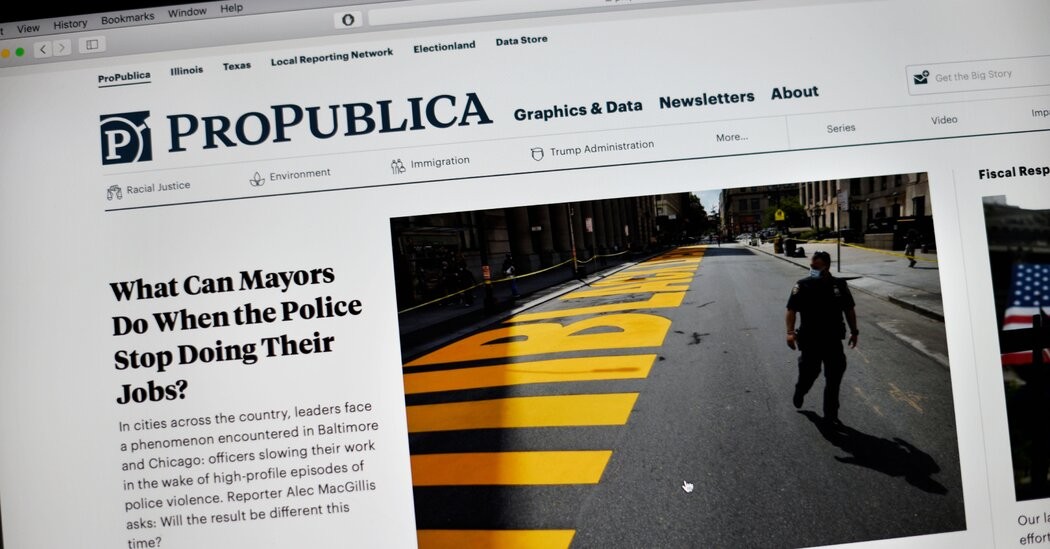
Journalists at ProPublica, one of the most prominent nonprofit investigative newsrooms in the United States, staged a 24-hour strike on Wednesday. The walkout marks the first major labor action since approximately 150 employees—including reporters, copy editors, and communications staff—unionized in 2023.
The strike follows more than two years of stalled negotiations between the staff and management, leaving a critical gap between the newsroom’s mission and its operational agreements.
The Core Disagreements
While wage increases and layoff protections are standard pillars of labor negotiations, this dispute is uniquely shaped by the rapid integration of Artificial Intelligence (AI) in the media industry.
According to union members, the workers are demanding three specific pillars regarding technology:
– Influence over adoption: A seat at the table regarding how AI is integrated into newsroom workflows.
– Job security: Explicit protections against being replaced by automated technologies.
– Editorial transparency: Clear guidelines to ensure readers are informed when AI is used in the production of content.
“ProPublica is its workers,” said video journalist Katie Campbell. “When more than 100 people step away from their work for a day, that’s significant.”
A Growing Trend in Newsroom Labor Relations
The tension at ProPublica is not an isolated incident; it reflects a broader, industry-wide struggle as newsrooms navigate the “AI revolution.” The stakes are high: recent high-profile errors—such as Bloomberg’s AI-generated summary mistakes—have demonstrated that unguided AI use can damage journalistic credibility.
As a result, labor unions like the NewsGuild of New York (which represents ProPublica staff and some New York Times journalists) are increasingly prioritizing “guardrail” language in collective bargaining agreements. These clauses aim to protect human jobs and ensure that AI serves as a tool for journalists rather than a replacement for them.
The Legal and Management Stance
The conflict has moved beyond the newsroom and into the legal arena. The union has filed an unfair-labor-practice charge with the National Labor Relations Board (NLRB), accusing ProPublica of failing to bargain with the union before implementing a new AI policy.
Management, however, maintains that they are acting in good faith. A spokesperson for ProPublica stated:
– The company has offered proposals that align with those accepted by the NewsGuild at other major news organizations.
– The organization has a history of stable employment, noting they have never conducted layoffs.
– They remain committed to reaching a “fair and sustainable” first contract.
Conclusion
The ProPublica strike highlights a pivotal moment for modern journalism, where the fight for fair wages is now inextricably linked to the fight for human agency in an era of automation. The outcome of these negotiations will likely set a precedent for how nonprofit newsrooms balance technological innovation with labor rights.