


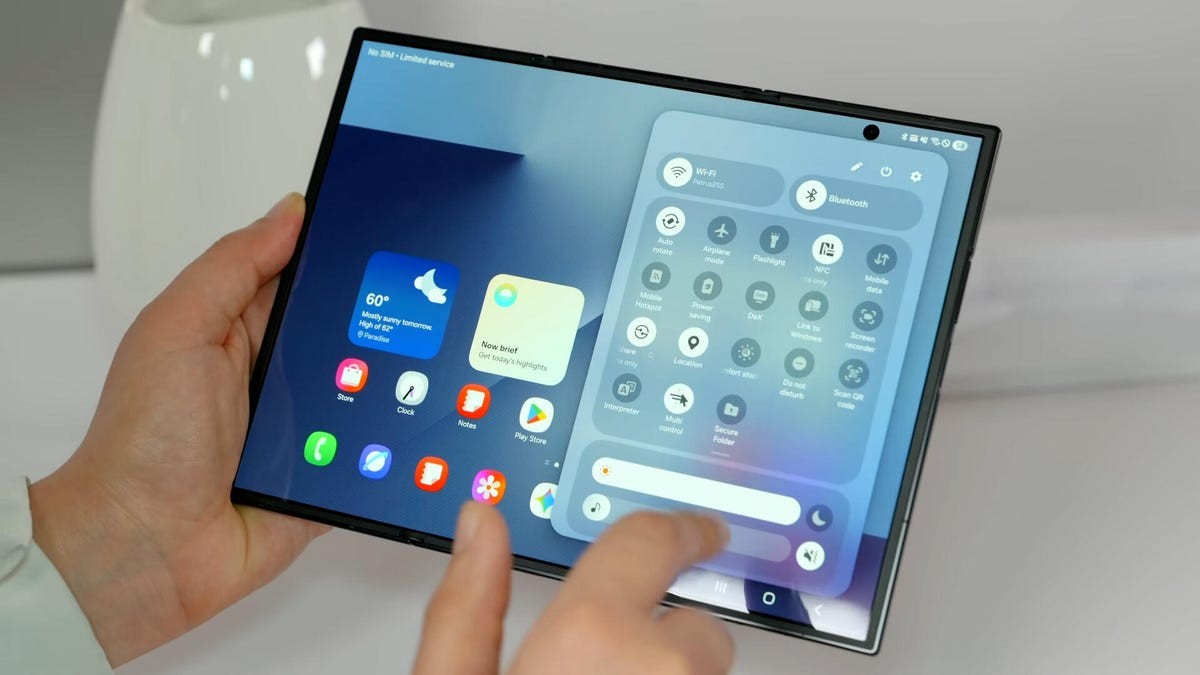
Samsung’s latest innovation, the Galaxy Z TriFold, unveiled at CES 2026, marks a significant leap forward in foldable technology. Unlike earlier iterations focused on thinness, this device prioritizes practicality as a true hybrid between a smartphone and a tablet.
The Hybrid Advantage
The Z TriFold isn’t just another foldable; it genuinely fills the gap between compact portability and expanded functionality. When closed, it maintains a pocketable form factor at 12.9mm thick. Opened, the device unfolds into a 10-inch display, offering ample space for multitasking, media consumption, or document editing.
The device feels surprisingly comfortable despite its complexity. The 309-gram weight is noticeable but not cumbersome, and the thinnest point measures just 3.9mm when unfolded. This design makes it a more versatile tool than Samsung’s book-style Z Fold 7 or the ultra-thin S25 Edge, which prioritize sleekness over usability.
Key Specs and Comparisons
The Z TriFold features a 6.5-inch cover display for quick tasks and a full 10-inch internal screen for immersive experiences. It boasts a robust 5,600-mAh battery, addressing a common concern with earlier foldables – battery life. This contrasts with the Z Fold 7’s 4,400-mAh battery, which, while decent, left little headroom. The Z TriFold also supports 45-watt super-fast charging and includes a charging brick in the box—a welcome return to consumer-friendly packaging.
The camera array is also noteworthy: a 200-megapixel main sensor, a 12-megapixel ultrawide, and a 10-megapixel telephoto lens, matching the Z Fold 7 in photographic capabilities. The trade-off for the larger screen is the presence of two visible creases from the folding mechanism, though Samsung has mitigated this issue compared to previous models.
User Experience and Availability
The unique triple-fold design introduces a slight learning curve. Closing the device requires folding the left panel first; the phone provides haptic feedback if you attempt it incorrectly. This ensures long-term durability and smooth operation.
The Z TriFold is already available in select markets including Korea, China, Taiwan, Singapore, and the UAE, with reports of rapid sell-outs in Korea suggesting strong consumer demand. Samsung plans a US launch in the first quarter of the year. This rollout will test whether the device’s hybrid functionality resonates with American consumers as it has elsewhere.
The Galaxy Z TriFold doesn’t just fold; it transforms. It offers a genuine two-in-one experience that existing foldables struggle to match, making it a compelling option for users who demand both portability and productivity.