



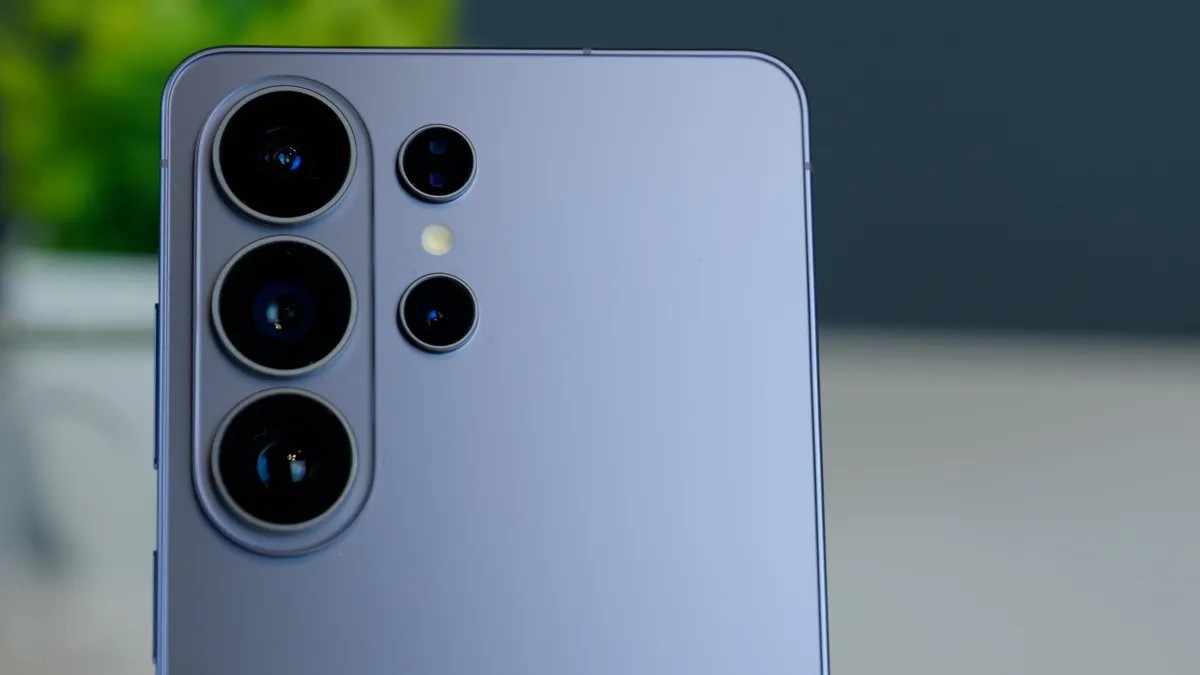
Samsung has unveiled its Galaxy S26 Ultra, and while the design and display refinements are notable, the camera system’s enhancements are dominated by artificial intelligence (AI). The flagship device maintains similar hardware specifications to its predecessor, yet introduces AI-driven editing tools that allow users to manipulate images in unprecedented ways.
Hardware: Incremental Updates, Familiar Specs
The S26 Ultra retains the camera array from the S25 Ultra: a 200-megapixel main sensor, a 50-megapixel ultrawide, and dual telephoto lenses (10-megapixel 3x, 50-megapixel 5x). While hardware changes are minimal, Samsung has slightly widened the apertures of the main and ultrawide cameras to improve low-light performance. Night mode has also been refined with software processing for noise reduction and color accuracy.
The phone still shoots 8K video and supports professional Log codecs with LUTs (Look-Up Tables), making it more attractive for filmmakers. Samsung even livestreamed its launch event using the S26 Ultra, underscoring its video capabilities. A new “Horizon Lock” feature stabilizes footage by keeping the horizon level, similar to action cameras.
The AI Revolution: Editing with Natural Language
The most significant updates revolve around AI integration. Samsung’s new camera experience allows users to edit images using natural language prompts. This includes compositing elements from different photos, such as adding a dog into someone’s arms, or even changing an individual’s clothing in real time.
During the Unpacked presentation, Samsung demonstrated these tools, showcasing how a subject’s attire can be altered from casual to streetwear with a simple command. The AI appears to produce photo-realistic results, but real-world performance remains to be tested.
The trend of prioritizing AI “gimmicks” over raw image quality is concerning. While the AI tools are impressive, their utility in everyday photography is questionable.
Context: Why This Matters
The S26 Ultra’s camera upgrades reflect a broader industry shift towards AI-driven features. Manufacturers, including Apple, are increasingly integrating AI into their devices to differentiate them in a saturated market. This trend raises questions about whether these tools enhance creativity or simply replace fundamental photographic skills.
The focus on AI editing also highlights the growing importance of computational photography. Even incremental hardware improvements are overshadowed by software algorithms that manipulate images post-capture.
The Galaxy S26 Ultra’s camera is a testament to this evolution, blending familiar hardware with powerful AI tools. The question now is whether these tools will fundamentally change how people take and edit photos, or simply serve as another distraction in the endless cycle of smartphone upgrades.