



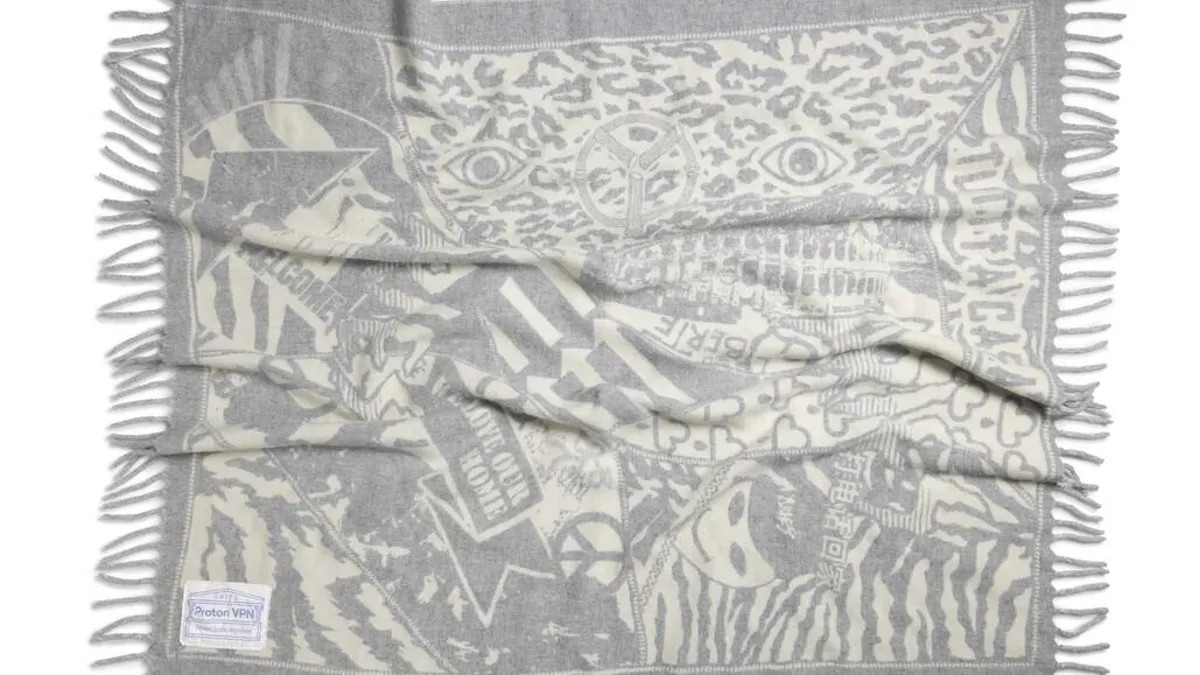
ProtonVPN, a well-known VPN service, has partnered with British streetwear brand Aries to release a limited-edition blanket containing an integrated NFC chip. The chip unlocks a free month of Proton’s Unlimited VPN service—typically priced at $10 monthly—giving users access to content from over 120 countries.
The Concept: Blurring Lines Between Tech and Comfort
This collaboration marks what the companies call the “world’s first VPN blanket,” though NFC technology isn’t new. The blanket is designed to promote ProtonVPN’s service in an unconventional way, linking digital security with physical comfort. The move highlights how brands are increasingly experimenting with integrated tech in everyday products. NFC (Near Field Communication) is already common in payment systems and access cards, making this application a logical, if unusual, extension.
Price, Design, and Materials
The blanket isn’t an impulse purchase; it costs $260. Measuring approximately 4 x 4.5 feet, it’s crafted in Italy from an 80% wool and 20% polyamide blend. The design is described as a chaotic mix of patterns, shapes (including alien heads and peace symbols), and phrases like “welcome” and “we love our home.” The aesthetic suggests a niche appeal, targeting fashion-conscious tech enthusiasts.
Why This Matters
This product launch is more than just a quirky marketing stunt. It demonstrates a trend toward embedding digital functionality into physical goods, potentially turning everyday items into access points for services. While the blanket itself may not revolutionize VPN usage, it raises questions about the future of product integration: Will we see more tech-enabled apparel, furniture, or even food items?
The high price tag suggests this is a luxury item rather than a mass-market product. However, it establishes a precedent for how brands might leverage NFC and other technologies to create unique customer experiences.
The ProtonVPN blanket is a playful experiment in marketing and product integration, signaling a growing trend of blending digital services with physical commodities.