


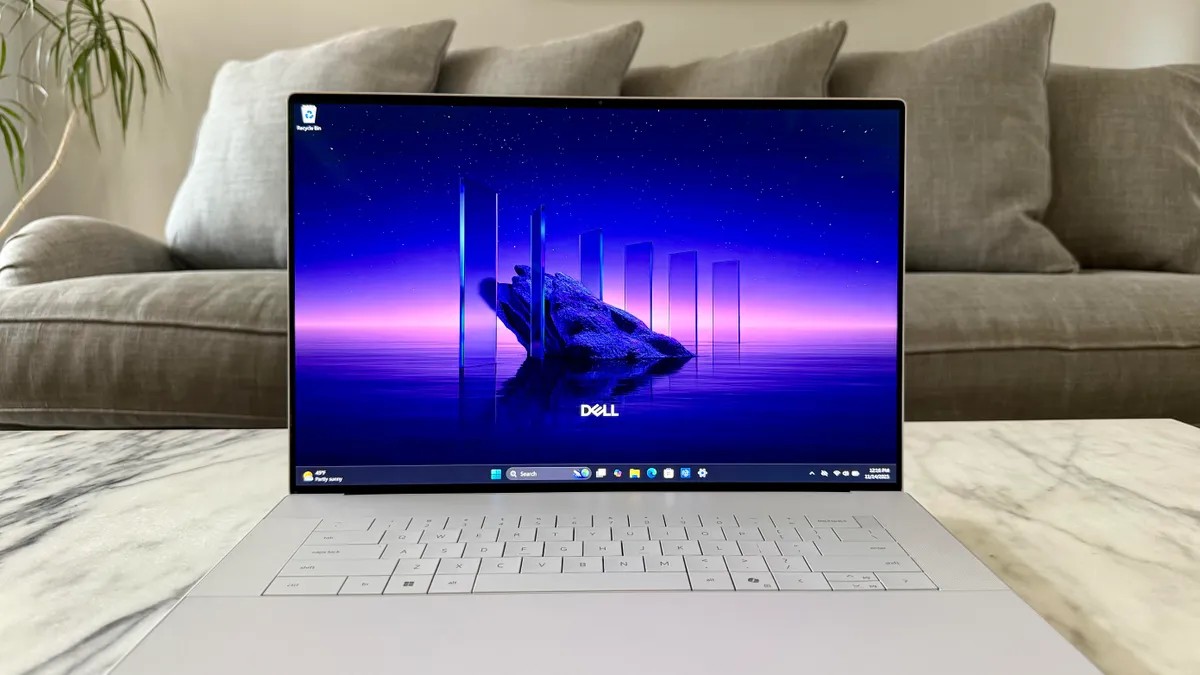
Dell’s latest 16-inch laptop, rebranded from the XPS line as part of the “Premium” series, represents an incremental update rather than a significant leap forward. While the new naming convention might not resonate with consumers expecting a radical shift, the core experience remains largely unchanged from last year’s XPS 16. This model retains the controversial minimalist design—including the invisible touchpad and touch-sensitive function row—with only minor adjustments.
Performance and Capabilities
The Dell 16 Premium boasts a large, high-resolution 16.3-inch 4K OLED display powered by Intel and Nvidia silicon. Testing shows a modest performance increase over the previous XPS 9640 model, but the RTX 5070 GPU is throttled, limiting its potential for demanding tasks like high-end gaming or sustained professional graphics work. Battery life has notably decreased compared to the older model, lasting less than 6 hours during typical video playback. This is a tradeoff for increased power, but it makes the laptop less practical for extended use away from an outlet.
Design and Build Quality
The design remains divisive. The keyboard and touchpad, though initially skeptical, have proven functional for many users. However, the lack of physical function keys continues to be a point of contention. The laptop’s weight has increased slightly to 5.15 pounds, making it less portable than competitors like the Asus ProArt P16. Dell’s decision to omit standard USB-A and HDMI ports while selling adapters separately at an inflated price ($35) is another annoyance for users. The inclusion of only a microSD card slot instead of a full-size SD card slot further limits its utility for professionals who rely on those devices.
Pricing and Alternatives
The Dell 16 Premium starts at $1,800 (or $1,550 on sale) with basic specifications. A fully configured model with an Intel Core Ultra 9, RTX 5070, 32GB RAM, and a 1TB SSD can reach $3,260 (discounted to $2,860). This pricing places it at a significant disadvantage compared to competitors. The Asus ProArt P16 offers comparable performance, lighter weight, longer battery life, and a lower price point. The Acer Aspire 16 AI provides an even more affordable option at just $700.
Conclusion
The Dell 16 Premium is a solid, if unremarkable, content-creation laptop. The design quirks and performance limitations, combined with its high price, make it a less compelling choice than alternatives from Asus and Acer. Unless you’re committed to the minimalist aesthetic, the ProArt P16 represents better value and overall usability.