




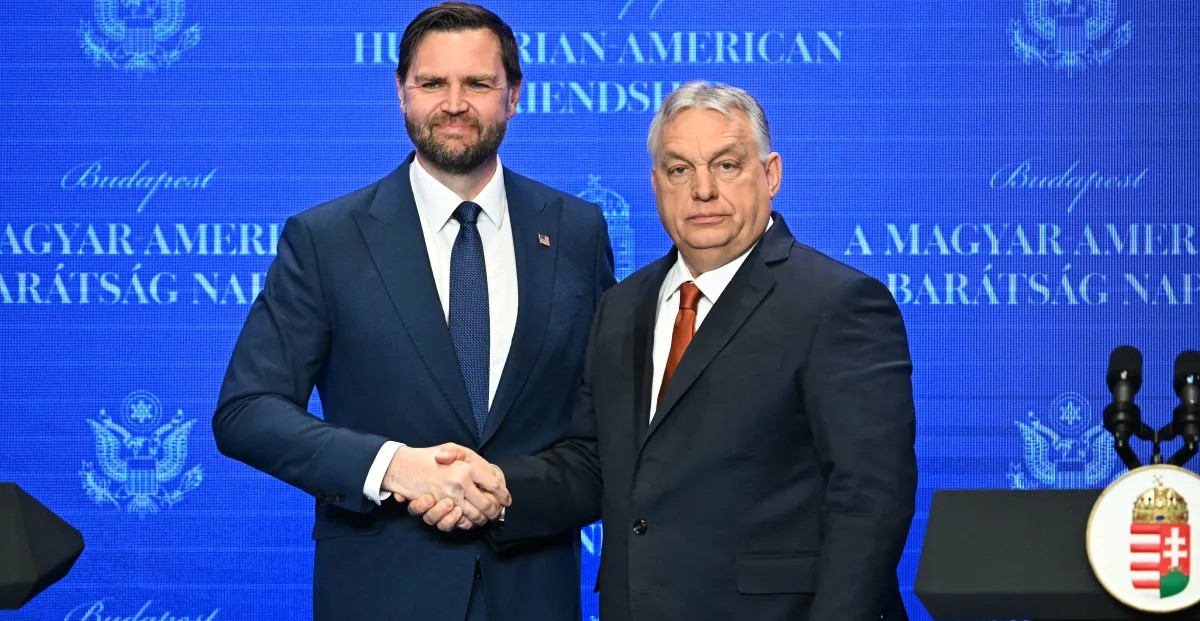
For the past 16 years, Hungary has functioned less like a standard European democracy and more like a political laboratory for modern autocracy. Under Prime Minister Viktor Orbán, the country has undergone a systematic transformation designed to ensure his Fidesz party never loses power again. Through gerrymandered electoral districts, a media landscape controlled by the state, and a judiciary packed with loyalists, Orbán has perfected a system of “competitive authoritarianism.”
In this model, elections are held, but the playing field is so heavily tilted that victory for the opposition is statistically improbable. However, as the upcoming election approaches, that mathematical certainty is being challenged.
The Rise of Péter Magyar and the Tisza Party
The primary threat to Orbán’s dominance comes from an unlikely source: Péter Magyar, a former high-ranking Fidesz insider. A charismatic defector, Magyar resigned from the regime in protest of a child sexual abuse scandal and has since built the Tisza party into a formidable political force.
Magyar’s strategy is working by targeting the very things Orbán’s “feudalistic” system has broken:
– Economic Discontent: While Fidesz-aligned oligarchs have grown wealthy, Hungary remains one of the poorest members of the EU, struggling with population decline and crumbling public services.
– Effective Communication: Despite the government’s media monopoly, Magyar has used social media and intensive in-person campaigning to bypass traditional gatekeepers.
– Credibility: As a socially conservative former insider, Magyar is uniquely positioned to peel away disillusioned Fidesz voters who are tired of corruption but wary of the traditional left.
Current polling suggests Tisza is leading Fidesz by a significant margin. While experts suggest the opposition needs a massive 10-to-15-point lead to overcome structural advantages, betting markets currently place Magyar’s chances of becoming Prime Minister at 66 percent.
A Blueprint for the American Right
The implications of this election extend far beyond Central Europe. For much of the American MAGA movement, Orbán’s Hungary is not a cautionary tale, but a political blueprint.
Leading figures in the American right, including Vice President JD Vance, have openly praised Orbán’s methods. They view his crackdown on academic freedom and his centralization of power as a successful model for tackling “cultural leftism” in the United States. This week, Vance even campaigned openly for Orbán, signaling that a victory for Fidesz is seen as a victory for the global far-right.
Conversely, an Orbán defeat would strike a significant ideological blow to this movement, challenging the narrative that such a consolidation of power is both possible and desirable in Western democracies.
Geopolitics: A Blow to the Kremlin
Beyond ideology, the election carries heavy stakes for international security, specifically regarding the war in Ukraine.
Orbán has acted as a “mole” within the Western alliance, frequently blocking EU and NATO aid to Kyiv and maintaining close ties with Vladimir Putin. His administration has used its position within the EU to disrupt Western unity, often acting as a spoiler for pro-Ukraine initiatives.
While the challenger, Magyar, is a nationalist who may not be a staunch supporter of President Zelenskyy, he lacks Orbán’s alignment with the Kremlin. A shift in power in Budapest would likely result in:
1. Reduced Russian influence within the European Union.
2. Increased stability in Western decision-making regarding Ukraine.
3. A weakened ability for Russia to exploit internal EU divisions.
The Path Ahead
Even if Magyar wins, the road to restoring a full democracy will be steep. Because much of Orbán’s power is enshrined in the Hungarian constitution, a new government would require a two-thirds supermajority in parliament to dismantle the current legal architecture.
The outcome of this election will determine whether Hungary returns to a functioning democracy or remains a cornerstone of the global authoritarian movement.
Conclusion:
The Hungarian election is a high-stakes referendum on the viability of modern autocracy. Whether it results in the preservation of Orbán’s “competitive authoritarianism” or a resurgence of democratic opposition will send shockwaves through the political landscapes of Washington, Brussels, and Moscow.