


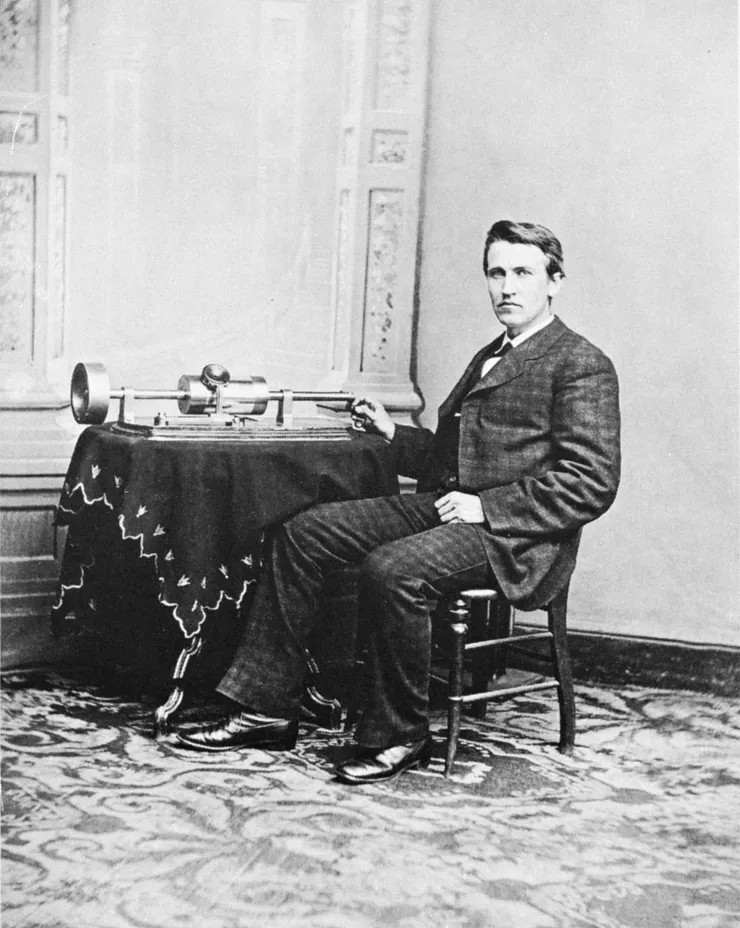
Thomas Alva Edison changed how we live, not just by inventing a lightbulb, but by creating the infrastructure that makes modern electricity possible. Born in Milan, Ohio, in 1847, he died in West Orange, N.J., in 1931, leaving behind a legacy of 1,093 patents. That is a world record. His formal education was short. He set up a lab in his father’s basement at age 10. By 12, he was selling newspapers and candy on trains. This early hustle defined his career: he built things to solve problems, often driven by his own need to overcome partial deafness.
How Edison’s Lab Model Changed Invention
Most inventors work alone in garages. Edison broke that mold. In Menlo Park, N.J., he created the world’s first industrial-research laboratory. This wasn’t a place for solitary genius. It was a factory for ideas. His team worked together to refine concepts into manufacturable products. He didn’t just want to know how something worked; he wanted to build it, sell it, and scale it.
This shift from individual tinkering to organized R&D laid the basis for the technological revolution of the modern electric world.
Which Inventions Defined Edison’s Early Career?
Before the lightbulb, Edison made his mark in communications. As a telegrapher from 1862 to 1868, he developed a machine that could send four telegraph messages down a single wire. He sold that invention to Jay Gould, a rival of Western Union, for more than $100,000. That was serious money in the 1870s.
Then came the breakthroughs at Menlo Park:
– Carbon-button transmitter (1877): Still used in telephone speakers and microphones today.
– Phonograph (1877): The first device to record and reproduce sound.
– Incandescent lightbulb (1879): The iconic symbol of his genius.
Developing the lightbulb required serious capital. Financiers like J.P. Morgan and the Vanderbilts advanced him $30,000. That investment allowed him to test filaments and build a practical system, not just a novelty.
Where Did Edison’s Power System Start?
A lightbulb is useless without a grid. In 1882, Edison supervised the installation of the world’s first permanent commercial central power system in lower Manhattan. This was the moment electricity moved from a curiosity to a utility. He didn’t just make bulbs; he built the network that delivered power to homes and businesses.
Why Did Edison Move His Lab to West Orange?
After his first wife died in 1884, Edison built a new laboratory in West Orange, N.J. The focus shifted. Alexander Graham Bell had improved the phonograph since Edison’s initial invention, so Edison’s team worked to commercialize it properly. They also developed an early movie camera, a device for viewing moving pictures, and the alkaline storage battery.
These later projects weren’t as famous as the lightbulb, but they expanded the reach of his technology. The alkaline battery, for example, paved


