


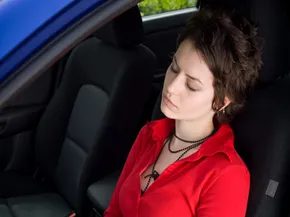
The morning alarm is the enemy of comfort. It rips you from your dreams, demanding immediate attention. But there is a different kind of alarm, one that operates while you are moving at 65 miles per hour on a dark highway.
Anti-sleep alarms do not just startle you for the sake of it. They exist to prevent fender benders or worse. If your eyes grow heavy, these devices intervene. They alert you before you nod off behind the wheel.
There are essentially two ways this technology works. One type is built into the vehicle. It uses sensors, cameras, and other high-tech tricks to discern fatigue. It then corrects the problem, often by tightening the seatbelt or issuing a loud warning. These in-car systems are a recent development. They add thousands of dollars to a car’s sticker price.
The second type is far simpler. It fits over the driver’s ear. It sounds an alert the moment the driver starts to fall asleep. While the built-in systems are expensive, the anti-sleep alarms for your ears are cheap and readily available. You can find them for $10 to $20. Brands include Nap Zapper, No Nap, and Doze Alert.
The names might sound silly. The need for these gadgets is not.
A poll by the National Sleep Foundation revealed that 60 percent of Americans have driven while feeling sleepy. Even scarier? 37 percent admit to falling asleep at the wheel in the past year alone.
Drowsy driving causes more than 100,000 car crashes and kills more than 1,500 people each year.
The National Highway Traffic Safety Administration (NHTSA) backs this up. The numbers are not abstract. They are bodies and wrecks. The safest course of action is obvious. Get a good night’s sleep. Take a nap before you drive. But sometimes, you have to drive late at night. Sometimes, you have to push through.
In those moments, an anti-sleep alarm could be the difference between a minor scare and a tragedy. How exactly do these gadgets see you when you are sleeping? And how do they know when you are awake? The answer lies in the sensors and the signals they track.
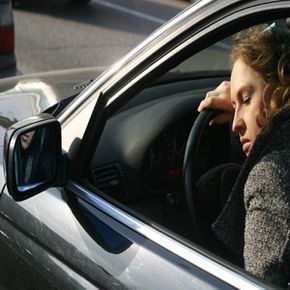

Let’s start simple. The most basic anti-sleep alarm is an over-the-ear gadget. It looks like a cheap telephone earpiece or portable headphone. Light plastic. An arm slips over one ear. Inside, a sensor measures the angle from a perpendicular perspective. If you are looking straight ahead—which you should be doing while driving—the alarm registers zero degrees.
It’s a clever, if rudimentary, piece of hardware. Think about falling asleep on a subway or in high school algebra. Your head drops. You might stay under for seconds or minutes before your chin hits your chest and you jerk awake. Annoying on the commute. Dangerous on the highway.
These alarms catch that forward tilt. When the earpiece senses an angle increase—say, 15 or 30 degrees—it sounds the alarm. Manufacturers stress that the noise is irritating enough to break the doze. But it shouldn’t be so sudden or loud that you panic, yank the wheel, or stomp the gas. That would be worse than being asleep.
You can adjust the sensitivity. If you nod off with your head almost upright, set it to a smaller angle. If you bob your head to the radio and trigger it constantly, bump the threshold to 30 degrees or higher.
Beyond the Earpiece: Factory-Installed Safety Tech
The over-the-ear solution works. But high-end automakers are putting sleep sensors right into the chassis. They aren’t waiting for you to buy an accessory.
Mercedes-Benz uses Attention Assist. It doesn’t look at your face. It monitors the engine control unit for changes in steering patterns and driving habits. If the car detects erratic input, it warns you.
Lexus went the optical route. A camera in the dashboard tracks the driver’s face. It looks for micro-expressions and movements that signal drowsiness, rather than analyzing how the car is being steered.
Volvo’s Driver Alert Control is a lane-departure system. It watches your position on the road. If you drift between lanes, it corrects the vehicle and alerts you. It assumes drifting equals drifting off the mental edge.
Saab takes a more aggressive approach. Two cameras in the cockpit monitor eye movement. If you still seem sleepy after the first text message warning on the dash, a stern audio message follows.
These in-car systems are expensive. Cameras and complex algorithms cost more than a plastic clip-on device. And they aren’t available in every car. So who actually needs an anti-sleep alarm?
Who Needs an Anti-Sleep Alarm?
Drivers are the obvious market. Truck drivers hauling freight overnight have tight schedules. An over-the-ear alarm and a thermos of coffee might keep them alert without needing pharmaceuticals. Even a casual spring break road tripper could benefit from the extra layer of security.
But the use case extends beyond the driver’s seat.
Students cramming through the night for finals can skip the chemical stimulants. Slip an alarm over the ear instead. If you start nodding off while reading, it wakes you up.
Night security guards working stationary posts or gate houses can also use this technology. It’s hard to stay sharp in a quiet booth for eight hours.
However, there is a catch. While these alarms keep eyes open, they don’t fix the underlying fatigue. Driving while sleepy is dangerous. Relying on an earpiece can give you a false sense of security. You might think you’re safe because the alarm is working. But you’re still operating a two-ton vehicle with impaired reaction times.
This danger led the Australian state of Victoria to ban the devices in 2007. They pending further safety testing. The fear was that drivers would rely on the gadget instead of pulling over.
Are You a Drowsy Driver?
The National Sleep Foundation offers a checklist. If you recognize these signs, you are too sleepy to drive.
- Difficulty focusing.
- Frequent blinking or heavy eyelids.
- Daydreaming or disconnected thoughts.
- Trouble remembering the last few miles driven.
- Missing exits or traffic signs.
- Repeated yawning or eye rubbing.
- Trouble keeping your head up.
- Drifting from your lane.
- Hitting shoulder rumble strips.
- Tailgating.
- Feeling restless and irritable.
If you hit more than one of these, don’t buy an alarm. Stop. Take a nap.
The best remedy for drooping eyelids is to stop and rest. No gadget can replace sleep.
Frequently Answered Questions
What is an anti-sleep alarm for drivers?
An anti-sleep alarm for drivers is a device designed to keep drivers awake and alert on the road. It typically uses sensors to detect head position or eye movement and emits a sound or vibration when drowsiness is detected.
What is an anti-sleep alarm for students?
An anti-sleep alarm for students is a small, portable device that helps prevent falling asleep while studying. It uses motion sensors to detect head nodding and emits a loud noise or vibration to startle the user awake.
The market for keeping drivers awake didn’t stop at scientific studies. It exploded into a weird, niche category of car accessories designed to jolt you back to reality. If you were driving in the late 2000s, you might have run across products with names that sound more like horror movie villains than safety devices.
Take the Doze Alert. It comes from Sav-A-Life Company. The premise is brutal but simple. A sensor clips to your seat or steering wheel. If it detects the characteristic slow blink or head nod of drowsiness, it triggers a loud alarm. Some versions even include a vibrating motor. The goal is to scare the sleepiness out of you.
Then there is the Drive Alert Master. Smart Home Company sold this one. It works similarly. Eye-tracking or head-position monitoring. When fatigue sets in, the system makes noise. It doesn’t ask nicely. It demands attention.
The Shock Approach vs. The Subtle Warning
Most of these devices fall under the umbrella of “anti-sleep driving alarms.” They rely on a startle response. The logic is that a sudden noise or vibration will reset your neural pathways. You sit up. You blink hard. You grip the wheel tighter.
It’s aggressive. And it raises questions about effectiveness versus annoyance.
Consider the Nap Zapper. The website suggests it’s a gadget for heavy sleepers. The name itself implies violence against naps. It’s not just about staying awake; it’s about actively fighting the urge to close your eyes.
Similar products like The No Nap took the same approach. They targeted the same demographic: long-haul truckers, night-shift commuters, and anyone who thought they could push through on less than four hours of sleep.
Why These Devices Failed to Catch On
If drowsy driving is such a killer, why don’t you see these alarms in modern cars? Or at least, why isn’t one standard in every sedan?
The answer lies in regulation and driver acceptance.
In Australia, the Office of the Minister for Consumer Affairs in Victoria actually banned a specific anti-sleep alarm in April 2007. The reasoning wasn’t that they didn’t work. It was that they could cause distraction or panic. A sudden blast of noise on the highway might cause a driver to swerve. The risk of an accident caused by the alarm outweighed the risk of falling asleep.
This wasn’t an isolated incident. It highlighted a fundamental problem with shock-based safety tech. It treats the symptom (nodding off) rather than the cause (sleep deprivation).
What Manufacturers Learned
The data from Reuters and the National Sleep Foundation makes it clear. Drowsy driving is a massive killer in the U.S. Reuven Fenton’s reporting from 2007 highlighted the scale of the problem. It’s not just a minor inconvenience. It’s a public health crisis.
Yet, the solution wasn’t to shock drivers. It was to monitor them.
Saab pioneered a different approach. They looked at the eyes. Erin Riches noted in an Edmunds blog that Saab’s system monitors eyelid closure and blink rate. It doesn’t yell. It warns. It uses a chime or a visual cue on the dashboard. It’s subtle. It’s


