



You might be imagining something straight out of a cyberpunk fantasy. Picture gangs of futuristic bikers flexing iridescent bicep skulls. Imagine the crackle of Tesla coils echoing across a beach filled with tramp stamps. If that is what you see, you are looking at fiction. Real electronic tattoos don’t look like neon back crucifixes or digital dolphin ink.
The reality is far more practical. It is also far more important.
This technology could save lives. It may become a standard part of modern healthcare. In the long run, it might change what it means to be human. We are not talking about fashion. We are talking about epidermal electronics.
These are thin, flexible patches of rubber. They contain electrical components that are equally pliable. The wires inside are made of silicon. They are mere nanometers in thickness. The result is a thin film of elastic gadgetry.
Think of it as a temporary tattoo. Remember the bubblegum wrappers from your childhood? Those lick-and-peel transfers were simple glue and ink. Epidermal electronics adhere to the skin differently. They conform to the texture of your skin. They stick firmly in place. They last for days.
But they don’t look like a fire-breathing dragon. They look like a thin sticker filled with circuitry. They won’t convince your classmates you joined a street gang. They do something better. They read your vital signs.
They eavesdrop on your internal systems. They whisper that data to physicians who can use it to prolong your life.
How Epidermal Electronics Work
The mechanics are simple but precise. The device sits on the surface of the skin. It does not penetrate deep into muscle or bone. It relies on the natural curvature of the body to stay in place. This allows for continuous monitoring without discomfort.
Standard medical sensors often use bulky wires or adhesive pads that pull at the skin. These old methods can irritate patients. They can fall off during movement. They require frequent replacement. Epidermal electronics solve these problems.
The silicon wires are so thin they are barely visible. They bend with your skin. They stretch when you move. This flexibility is key. It ensures the connection remains stable. Data transfer is consistent.
Doctors get real-time information. They can monitor heart rate. They can track breathing patterns. They can detect abnormalities before they become emergencies. This is not just convenience. It is safety.
Why This Matters for Medical Care
Current healthcare often relies on episodic check-ups. Patients visit a clinic. They get scanned. They leave. The next check-up might be months away. Problems can develop in the gaps.
With epidermal electronics, monitoring becomes continuous. The device stays on the skin for days. It collects data while the patient sleeps. It collects data during exercise. It collects data during stress.
This continuous stream of data provides a complete picture. It reveals patterns that a single snapshot might miss. Doctors can see how a patient’s body responds to medication. They can see how lifestyle changes affect health.
This is particularly useful for chronic conditions. Heart disease patients benefit from constant heart rhythm monitoring. Diabetic patients can track stress levels that affect blood sugar. Post-surgery patients can be watched remotely. They don’t need to stay in

Stretchable Silicon: The Tech Behind Electronic Skins
Traditional diagnostics work fine if you’re already in a clinic. MRI machines, blood draws, electrode-laden headcaps—they provide data with surgical precision. The problem lies outside those sterile walls. You can’t carry a suitcase-sized EEG machine to the gym. You can’t strap bulky sensors to your ribs for a week-long sleep study without feeling ridiculous.
That friction is where epidermal electronics step in.
The goal isn’t to replace the hospital. It’s to remove the hospital from the equation for routine monitoring. The concept mirrors how a discreet earpiece or a hidden wire works in intelligence work. Minimal profile. Maximum function. No one wants to wear suction cups that irritate their skin or drag a battery pack around for basic health tracking.
The Engineering Breakthrough
Dr. John A. Rogers at the University of Illinois at Urbana-Champaign has been pushing on this problem since 2008. His company, MC10, was built on an “electronics everywhere” philosophy. Rogers didn’t just want better software; he wanted hardware that respected biology.
Human bodies are messy. We sweat. We stretch. We itch. Standard silicon chips are rigid and brittle. They crack under pressure. To bridge this gap, Rogers and his team had to rethink the fundamental materials.
They didn’t abandon silicon. They broke it down.
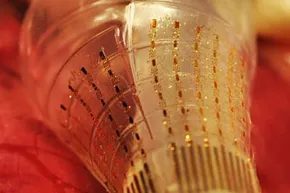
Tiny wires of silicon are arranged in coiling patterns. These coils are embedded in thin, flexible rubber. The design allows the material to expand and contract without breaking the electrical circuits. The sensors, antennas, and even LEDs are woven into this stretchable mesh. It’s a masterclass in micro-engineering.
Real-World Application
The user experience is drastically simplified. Forget gel pads and tangled wires.
To monitor brain activity, you simply apply a patch to your forehead. A spray of liquid bandage secures it. Then you go about your day. The patch might sit on a beach or in a boardroom. It collects solar energy, reads vitals, and transmits the data.
Early prototypes relied on wired connections to external computers. That was a limitation. The newer versions focus on wireless transmission, including WiFi compatibility. This shift is critical for true “continuous” monitoring. Data needs to move freely.
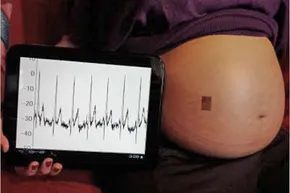
The applications have expanded rapidly. Initial models tracked muscle, heart, and brain signals. Then came pregnancy monitoring. Then muscle stimulation in rats. Rogers has also pushed the technology inside the body, placing stretchable electronics on balloon catheters inserted into the human heart. This allows for internal monitoring without the risks associated with rigid metallic implants.
Beyond Health: The “Animated Tattoo” Hype
Rogers’ vision extends beyond clinical utility. There is a fascination with what these substrates can do visually. The media often jumps to “animated tattoos.”
Let’s clarify the reality.
The technology described so far is for health metrics. The idea of “animated tattoos” that dance or change images programmatically is often conflated with subcutaneous implants. Those are different entities. While the base material—the stretchable, biocompatible mesh—is similar, the “dancing tattoo” concept usually refers to visible, programmable implants designed for novelty or cosmetic effects. They are not the primary medical tool Rogers is building.
However, the underlying capability for dynamic display exists. If a device can sense a heartbeat, it can trigger a visual response. The distinction between a medical sensor and a cosmetic display is largely a matter of software and intent, not hardware.
Why This Matters
This isn’t just about convenience. It’s about data density.
Current health monitoring is episodic. You go to the doctor, you get checked, you leave. The gap between visits is filled with guesswork. Epidermal electronics fill that gap. They allow for longitudinal data collection. We can see trends over weeks or months, not just snapshots during a crisis.
The shift from rigid silicon to stretchable microsystems represents a fundamental change in how we interface with technology. We are moving toward wearables that feel like skin rather than accessories.
The implications for chronic disease management are significant. Imagine diabetic monitoring that is invisible. Imagine cardiac tracking that doesn’t restrict movement. The technology is nascent, but the trajectory is clear. We are moving toward a world where the boundary between the body and the machine is porous.
It’s not quite “cyborg” in the sci-fi sense. But it’s close. And it’s happening on your skin.
Epidermal electronics: Beyond passive monitoring
Electronic tattoos aren’t sitting in your local hospital yet. But Dr. John A. Rogers and his team at MC10 are building the future of epidermal electronics. They don’t see these devices as passive observers. They see them as active agents in rehabilitation.
Think about long-term immobilization. Patients spend weeks in a hospital bed. Muscles atrophy. The patches might help patients walk again. How? By stimulating muscle contractions directly. The technology also simplifies prosthetic limbs. It serves as the link between biology and machine.
Controlling tech with muscle signals
One researcher tested this by placing an electronic skin patch on his neck. He used muscle movements to control a computer game. He spoke a word. The virtual game world responded instantly.
The implications go beyond gaming. Researchers imagine patches picking up muscular movements of speech. This could give voice to the mute. It could also allow covert military operatives to speak silently to their home base.
“Biological inputs dictate the behavior of machines, and electronic signals inform expressions in the human body.”
The blurring line between man and machine
From here, it is easy to extrapolate. We get improved prosthetic limbs. We get robotic exoskeletons. The line between man and machine blurs completely. We become a race of cyborgs. Not the grotesque kind. The kind where technology conforms to the soft ways of the flesh.
It would also mean crazy-awesome video game controllers for everyone. But before the distinction between man and Mario fades, Rogers has a different goal. He wants to eliminate the need for surgical interventions in the first place.
Isn’t that more impressive than a pectoral flag tattoo that glows in the dark?


