



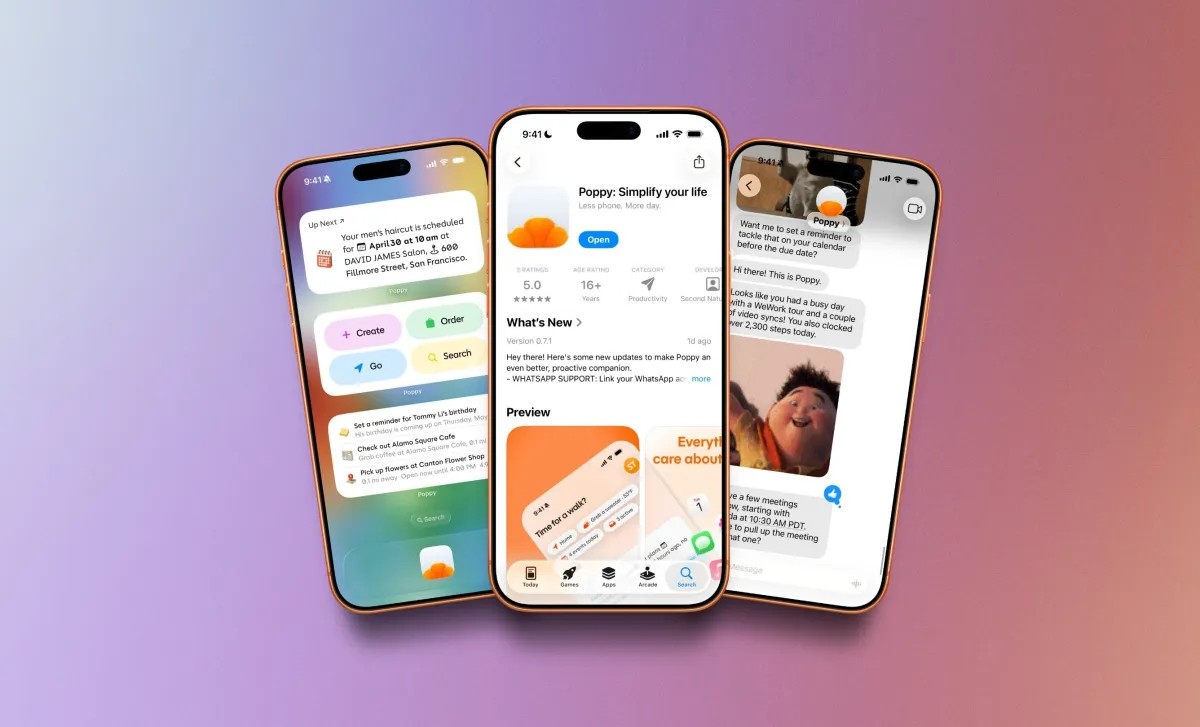
The modern smartphone is a paradox: it is the ultimate tool for productivity, yet its constant barrage of notifications and fragmented apps often leads to digital chaos. A new entrant in the personal organization space, Poppy, aims to resolve this tension by shifting from reactive management to proactive assistance. Rather than waiting for users to search for information or set reminders, Poppy integrates calendar, email, and location data to anticipate what matters most in the moment.
From Dashboard to Digital Concierge
At its core, Poppy functions as a centralized dashboard that aggregates data from disparate sources—such as Apple Calendar, Google Calendar, Gmail, Outlook, and messaging apps like WhatsApp and iMessage. However, its value proposition extends far beyond simple consolidation. By leveraging artificial intelligence, the app analyzes context to surface relevant information automatically.
The app’s slogan, “Poppy pays attention so you don’t have to,” reflects a shift in user experience design. Instead of manually checking multiple apps for updates, users can glance at Poppy’s widgets to see immediate priorities. This approach addresses a growing trend in tech: ambient computing, where technology senses user needs and acts before being explicitly asked.
Proactive Intelligence in Action
The true differentiator of Poppy is its ability to offer proactive suggestions based on real-time context. Consider these scenarios:
- Contextual Breaks: If the app detects a 30-minute gap in your calendar while your phone’s location data shows you are near a park, Poppy might suggest taking a walk before your next meeting.
- Personalized Recommendations: If you are planning brunch with a friend who previously mentioned dietary preferences in an email, Poppy can factor those details into restaurant suggestions.
- Life Management: Users can treat Poppy like a personal assistant, asking it to track flight changes or reminding them to take medication.
This functionality moves beyond basic task management into the realm of predictive assistance, reducing the cognitive load required to organize daily life.
The Vision Behind the Tech
Poppy was founded by Sai Kambampati, a computer scientist with a master’s degree specializing in human-computer interaction. Previously a software engineer at AI hardware startup Humane, Kambampati is driven by the potential of AI to make computing more intuitive and less intrusive.
“I’ve always been interested in challenging what computers are able to do, especially the idea of ambient computing and computers that can proactively sense what you need and anticipate your needs,” Kambampati told TechCrunch. “That’s something I found very, very exciting.”
Kambampati argues that current AI advancements have finally made this level of proactive assistance technically feasible. The goal is to create a seamless layer between the user and their digital ecosystem, one that understands context rather than just executing commands.
Privacy and Future Roadmap
Given the sensitive nature of the data Poppy accesses, privacy is a central concern. The company states that user data is encrypted in storage and employs a zero-retention policy when using cloud-based Large Language Models (LLMs) for suggestions. This means the data used to generate insights is not stored on the company’s servers after processing.
Looking ahead, Kambampati envisions a future where all processing happens locally on the user’s device. He estimates that within two to three years, advancements in on-device computing power and smaller, more efficient AI models will allow Poppy to run entirely offline, eliminating the need for server-side processing altogether.
Currently, the San Francisco-based team of four is supported by $1.25 million in pre-seed funding led by Kindred Ventures, with participation from angel investors including Logan Kilpatrick from DeepMind.
The Challenge of Integration
While the vision is ambitious, Poppy faces technical hurdles, particularly regarding Apple’s ecosystem. To access iMessage, Poppy currently relies on a Mac app, a workaround that may become problematic as Apple strictly limits third-party access to its messaging services. Expanding support to other apps like Uber and Instacart is also part of the roadmap, but maintaining seamless integration across fragmented platforms remains a significant engineering challenge.
Conclusion
Poppy represents a significant step toward ambient AI, where technology anticipates needs rather than demanding attention. By combining context-aware suggestions with a strong focus on privacy and future on-device processing, it offers a compelling alternative to traditional, reactive productivity apps. As AI models become more powerful and efficient, tools like Poppy could redefine how we interact with our digital lives, making organization effortless rather than a chore.