


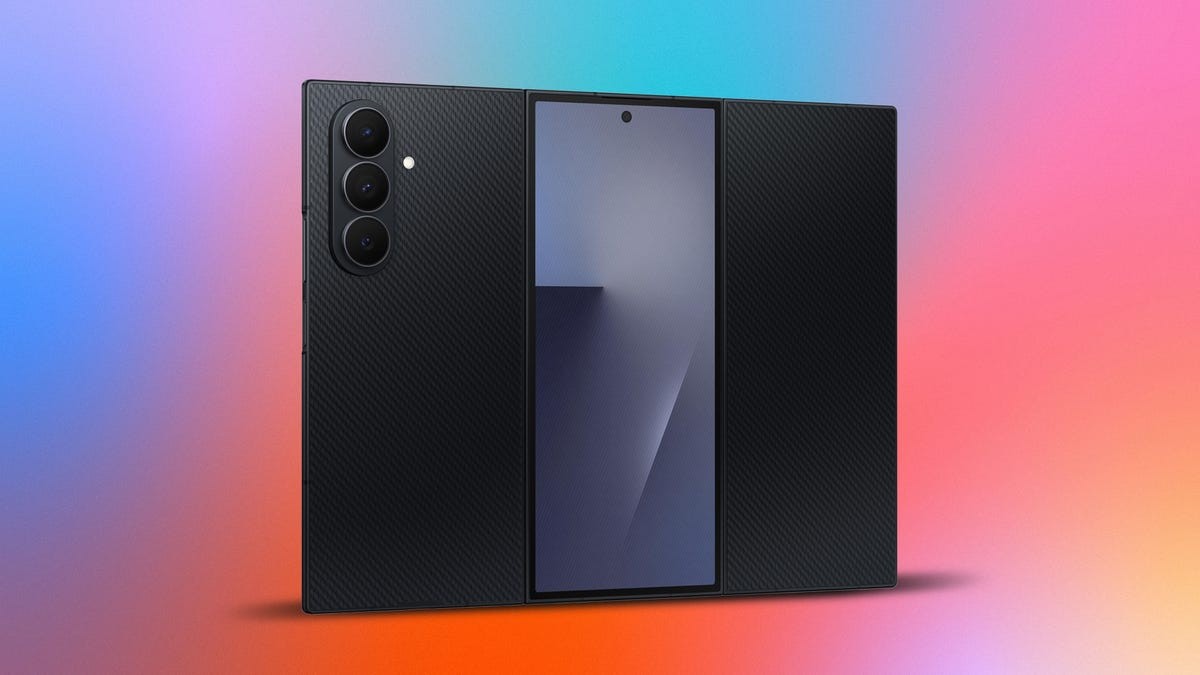
Samsung has officially released its Galaxy Z TriFold, a groundbreaking foldable smartphone featuring three interconnected displays. The device debuted in select markets – including Korea, China, Taiwan, Singapore, and the UAE – on Friday, priced at approximately $2,430. However, US consumers will have to wait until the first quarter of 2026 to experience this next-generation technology.
Redefining Foldable Technology
The Galaxy Z TriFold isn’t just another foldable; it introduces a novel form factor with two hinges enabling a three-section unfolding design. When fully extended, it presents a 10-inch display, alongside a 6.5-inch cover screen, bridging the gap between smartphone and tablet functionality. This design prioritizes display protection with an inward-folding mechanism and includes an auto-alert system to prevent incorrect folding, ensuring durability.
Design and Engineering Highlights
The Z TriFold showcases Samsung’s decade of innovation in foldable devices. The phone is remarkably thin, measuring just 3.9mm at its narrowest point – though this excludes the camera and protective film. The device incorporates a titanium hinge housing for longevity and an Advanced Armor Aluminum frame to prevent screen contact when folded.
The rear camera system features a 200-megapixel wide-angle lens, alongside 12-megapixel ultrawide and 10-megapixel telephoto cameras, mirroring the high-end capabilities of Samsung’s Galaxy S25 Ultra and Z Fold 7. Both cover and main screens include 10-megapixel front-facing cameras for versatile selfie options.
Performance and Power
Powered by a custom Snapdragon 8 Elite processor, the Z TriFold boasts a 5,600-mAh three-cell battery – an upgrade from the Z Fold 7’s 4,400-mAh capacity. The battery system is strategically placed across the three panels for balanced power delivery and all-day endurance, supporting 45-watt super-fast charging.
Unlike some competitors, such as Huawei’s Z-shaped trifold, Samsung’s design prioritizes inward folding for improved screen protection. The Z TriFold also features an IP48 water resistance rating, capable of submersion up to 1.5 meters for 30 minutes, though it lacks dust protection as seen in Google’s Pixel 10 Pro Fold with its IP68 rating.
Multitasking and User Experience
Samsung positions the Z TriFold as an ideal device for multitasking. The expanded screen allows users to run three portrait-sized apps simultaneously, resize windows for clear viewing, or review documents in a focused vertical orientation. The company also highlights the device’s suitability for immersive video consumption, allowing simultaneous viewing and comment reading. Samsung claims minimized creasing ensures a seamless user experience.
The phone’s AMOLED screens offer a 120Hz refresh rate, with the cover display peaking at 2,600 nits brightness and the main screen at 1,600 nits.
The Galaxy Z TriFold represents a significant step forward in foldable technology, but its delayed US release underscores the challenges of bringing cutting-edge devices to all markets. The high price point and niche appeal suggest it will initially cater to early adopters and tech enthusiasts seeking the ultimate in mobile versatility.


