




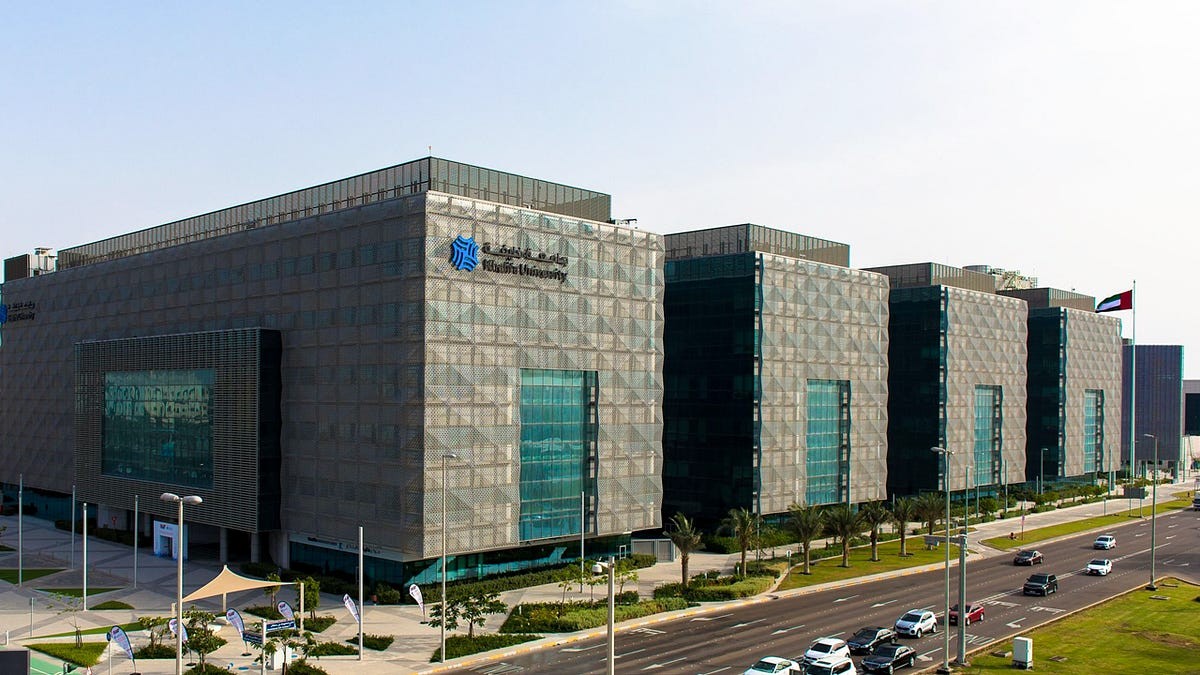
The United Arab Emirates is positioning itself as a key architect of the next generation of mobile connectivity, with telecom operator e& and Khalifa University jointly publishing a white paper detailing a blueprint for AI-native 6G networks. This framework embeds artificial intelligence directly into the core design of the network, unlike previous generations where AI was added as an afterthought.
Why This Matters Now
While much of the world is still deploying 5G, the telecom industry is already focused on 6G. The decisions being made today will determine what the future of mobile connectivity looks like. By offering a structured technical framework with clear performance metrics, e& and Khalifa University aim to influence global standards development—and ensure the UAE has a voice in shaping the future of 6G.
Core Principles of the AI-Native 6G Architecture
The white paper introduces a dedicated “AI-plane” alongside the traditional network layers (user, control, and management). This new layer enables continuous sensing, learning, and autonomous decision-making across all network domains. The architecture rests on five key pillars:
- Pervasive AI/ML: Embedding AI and machine learning throughout the entire network.
- Distributed Cloud-Edge Computing: Leveraging both cloud and edge resources for optimal performance.
- Advanced Technologies: Integrating capabilities like sensors for richer data insights.
- Open Programmability: Utilizing open interfaces for flexibility and innovation.
- Sustainability: Prioritizing energy efficiency in network design.
Measurable Performance & Real-World Applications
The framework doesn’t rely on vague goals. It introduces quantifiable AI-native key performance indicators (KPIs) such as decision latency for autonomous operation, learning accuracy, and energy efficiency per AI inference. This provides concrete targets for standardization bodies.
The white paper also outlines potential applications:
- Immersive XR: Fully immersive holographic and augmented reality with haptic feedback.
- Intelligent Transportation: City-scale systems for autonomous vehicles and traffic management.
- Industrial Automation: Advanced automation environments with real-time network optimization.
Collaboration for Impact
The partnership between e& and Khalifa University combines the operator’s practical network experience with academic research, producing a framework intended to be both technically sound and deployable in the real world. The digital twin integration allows networks to model and simulate their own behavior in real time, supporting predictive optimization and faster autonomous responses.
“This collaboration aims to combine real-world network experience with university-led research to produce frameworks that are both technically rigorous and practically deployable,” highlights the significance of this strategic partnership.
The UAE’s proactive approach to 6G standardization suggests a commitment to not just adopting future technologies, but actively shaping them. This initiative could position the nation as a global leader in the next wave of mobile innovation.