



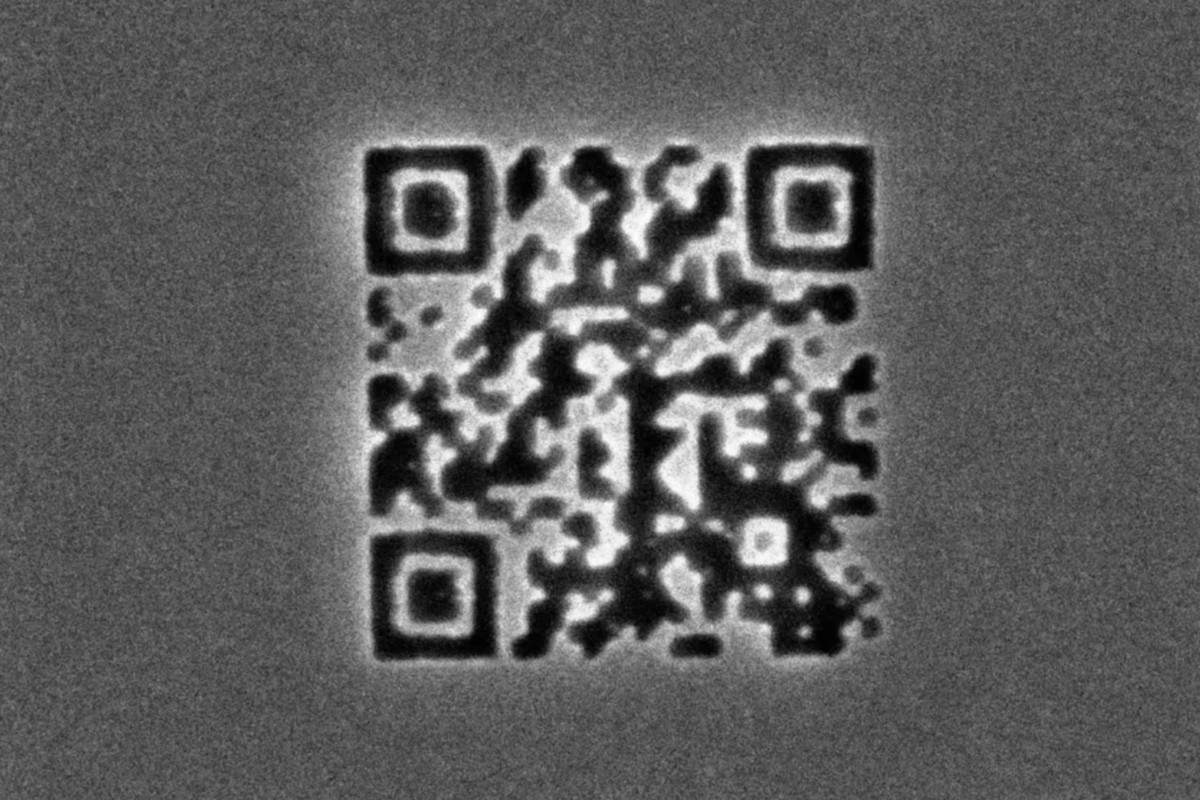
Scientists at Vienna University of Technology have engineered the world’s smallest functional QR code, measuring less than 2 square micrometers – smaller than many bacteria. This achievement, verified by Guinness World Records, isn’t about shrinking technology for fun; it’s a step towards radically long-lasting data storage.
The Challenge of Data Longevity
Modern data storage (hard drives, flash memory) degrades over decades. Magnetic tapes, while better, still require controlled environments. This new method, however, leverages the inherent stability of ceramic materials to etch data that could survive for centuries. The team used focused beams of charged particles to engrave the QR code into a durable ceramic film, ensuring it remains readable even under harsh conditions.
How It Works: Ceramic Etching at the Microscale
The team utilized ceramic films typically used for coating high-performance cutting tools. This material’s extreme durability means the tiny QR pattern resists wear and degradation far better than current storage solutions. The QR code itself is too small to be viewed with standard microscopes; it requires an electron microscope to reveal the pattern, which links to the university’s website.
“We live in the information age, yet we store our knowledge in media that are astonishingly short-lived,” says senior scientist Alexander Kirnbauer. “With ceramic storage media, we are pursuing a similar approach to that of ancient cultures, whose inscriptions we can still read today.”
Implications: Density and Future Development
The research isn’t just about making things small. The scientists estimate that, if scaled up, over two terabytes of data could fit on a single A4 sheet of ceramic. This density combined with longevity makes it attractive for archives, long-term backups, or even industrial applications where data persistence is critical. The team is now exploring whether this method can be used for more complex data structures beyond QR codes.
The next steps include refining the process to increase writing speeds, developing scalable manufacturing methods, and investigating different materials for even better performance. This research suggests a future where data isn’t fleeting but etched into materials that outlast us, mirroring the enduring records of past civilizations.
This breakthrough isn’t just a novelty; it’s a fundamental shift in how we think about preserving information, trading short-term speed for long-term reliability.