


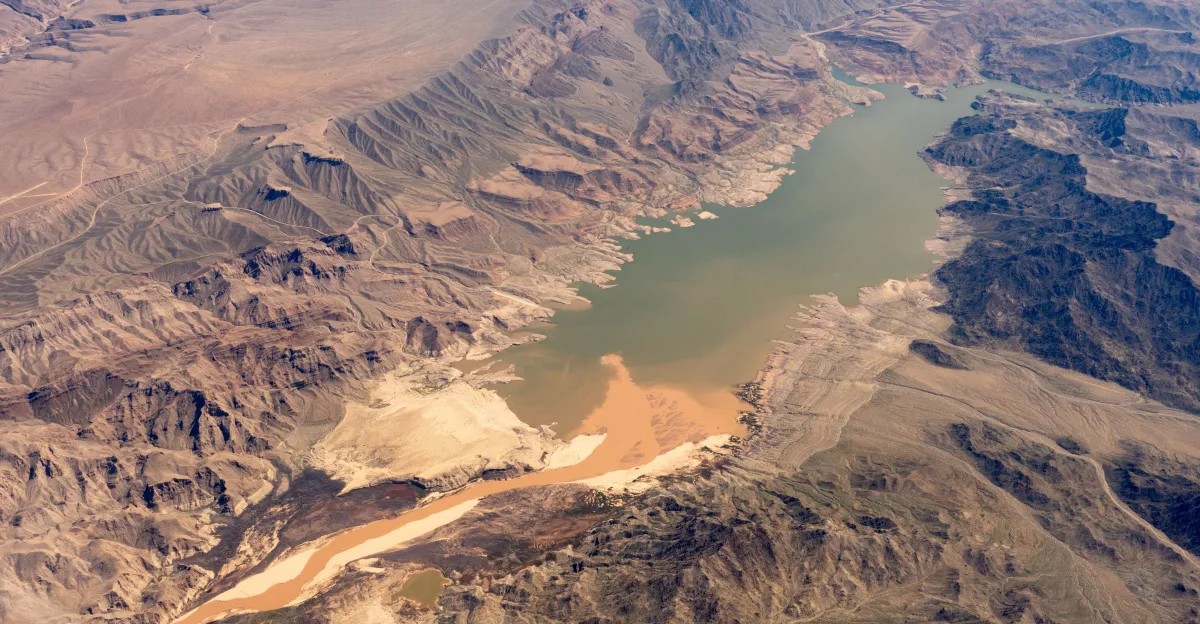
The American West is facing a dire water shortage, with the Colorado River—a lifeline for over 30 million people—drying up at an alarming rate. While public debate focuses on individual conservation efforts, the biggest culprit in this crisis isn’t wasteful lawns or long showers. It’s the massive demand for water to feed livestock.
The Scale of the Problem
The Colorado River Compact, governing water distribution among seven states and Mexico, is failing. Negotiations to secure future allocations have stalled, and the federal government may soon intervene to enforce cuts. But even drastic measures will fail to solve the underlying issue: agriculture consumes roughly 75% of the Colorado River’s water, with livestock feed dominating that share.
The Cow Factor
Nearly half of the water used in agriculture goes toward growing alfalfa and hay – almost exclusively to feed beef and dairy cattle. This means that at least 47% of the river’s water is dedicated to animal feed, yet this is rarely discussed in the broader water crisis narrative. This is unsustainable; the West’s limited water is primarily used to grow a low-value crop while cities struggle to maintain reserves.
The Economics of Thirst
This imbalance isn’t just environmental; it’s economic. In Utah, 70% of water is used for alfalfa production, yet this crop represents only 0.2% of the state’s GDP. This highlights a critical misallocation of resources. The livestock industry receives an outsized share of water while contributing comparatively little to the regional economy.
The Legacy of Water Rights
The situation is further complicated by the “prior appropriation” doctrine, inherited from the 19th-century Homestead Act. This system prioritizes long-established water rights, effectively locking in unsustainable usage patterns. Senior water rights holders in California, among others, continue to claim priority, making meaningful reform difficult.
The Path Forward
Addressing the Colorado River crisis demands a shift in priorities. Policymakers must recognize that sustainable water management requires rethinking the region’s reliance on water-intensive livestock production. Solutions include incentivizing farmers to fallow fields, allowing water rights trading, and, ultimately, confronting the unsustainable scale of beef and dairy farming in the arid West.
The reality is clear: while consumers are urged to conserve, the largest drain on the Colorado River isn’t golf courses or data centers; it’s the millions of cows consuming water in a region that can barely afford to spare it. Without acknowledging this truth, the West’s water future remains bleak.


