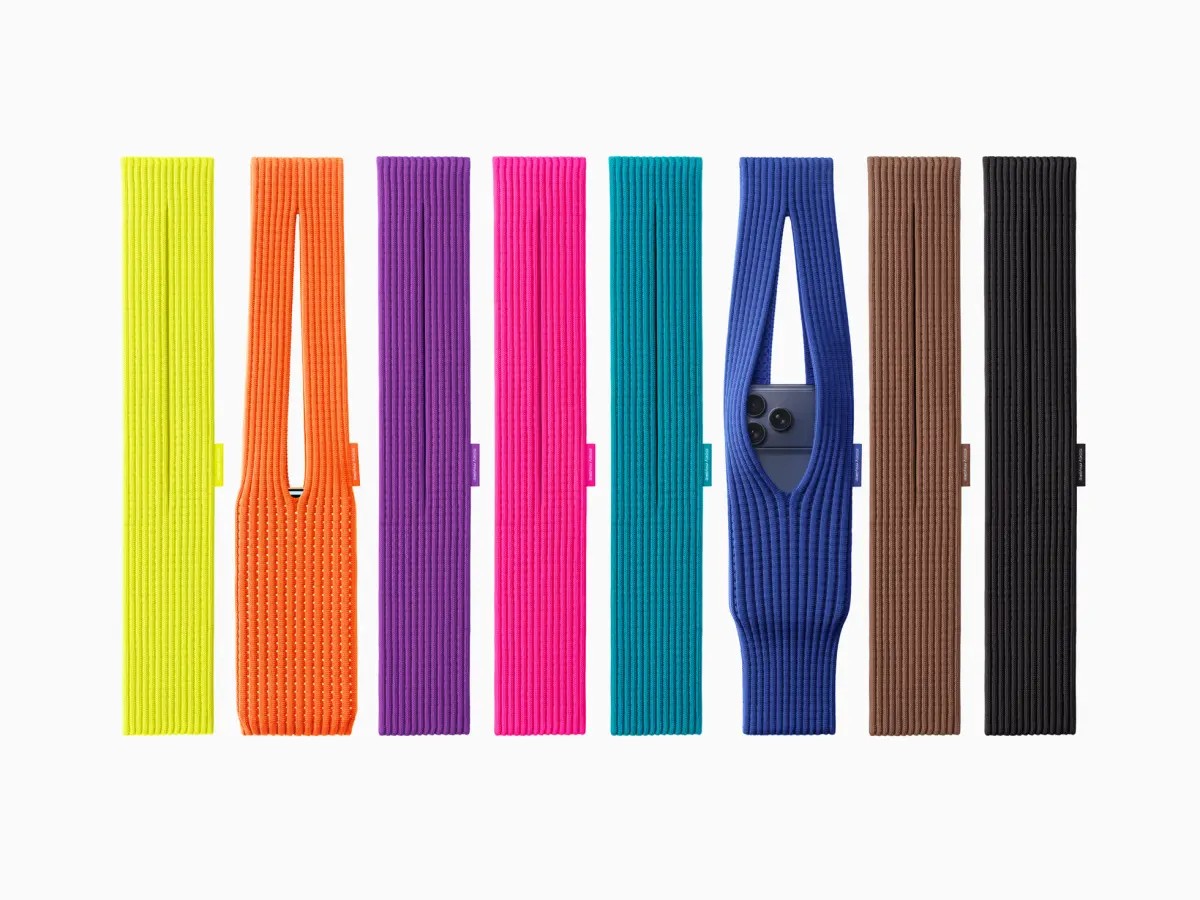
Apple recently unveiled its latest accessory: the iPhone Pocket, a cloth sling for your phone priced at $149.95 (short size) or $229.95 (long, crossbody). The product has sparked debate, but its logic lies within fashion trends and Apple’s history of design collaborations.
The iPhone Pocket isn’t just a random product; it’s rooted in the minimalist “A Piece of Cloth” (APOC) concept pioneered by Japanese designer Issey Miyake in 1997. This design philosophy, emphasizing simplicity and reducing waste, resonated with Steve Jobs, who admired Miyake’s innovative approach. Jobs commissioned Miyake to design a uniform for Apple employees in the 1990s, further solidifying their creative connection.
Apple’s accessory builds on the growing trend of crossbody phone accessories. The company already released its own $59 strap earlier this year, and the iPhone Pocket expands this concept with a focus on minimalist design. This isn’t isolated; brands like Free People, Baggu, Lululemon, and IKEA are all selling miniature versions of their bags as keychains, reflecting a broader shift toward phone-centric accessories.
The iPhone Pocket also taps into the appeal of seemingly frivolous accessories, like the Labubu monster plush keychains. These items gained popularity precisely because their value seemed arbitrary, attracting collectors and fashion enthusiasts. Like Labubu, the iPhone Pocket serves as an accessory for your accessories, fitting into a trend of accessorizing even the most essential items, like Stanley Cups.
The practicality of leaving the house with only your phone – thanks to Tap to Pay and keyless entry – has fueled demand for phone-centric accessories. The iPhone Pocket caters to this trend, offering a minimalist way to carry your device. While it may not become the next viral sensation, it aligns with broader consumer behaviors and design philosophies.
Ultimately, Apple’s $230 “sock” isn’t a random product; it’s a deliberate design choice rooted in fashion trends, historical collaborations, and evolving consumer habits. Whether it becomes a must-have accessory remains to be seen, but its logic is clear within the context of modern design and consumer culture