


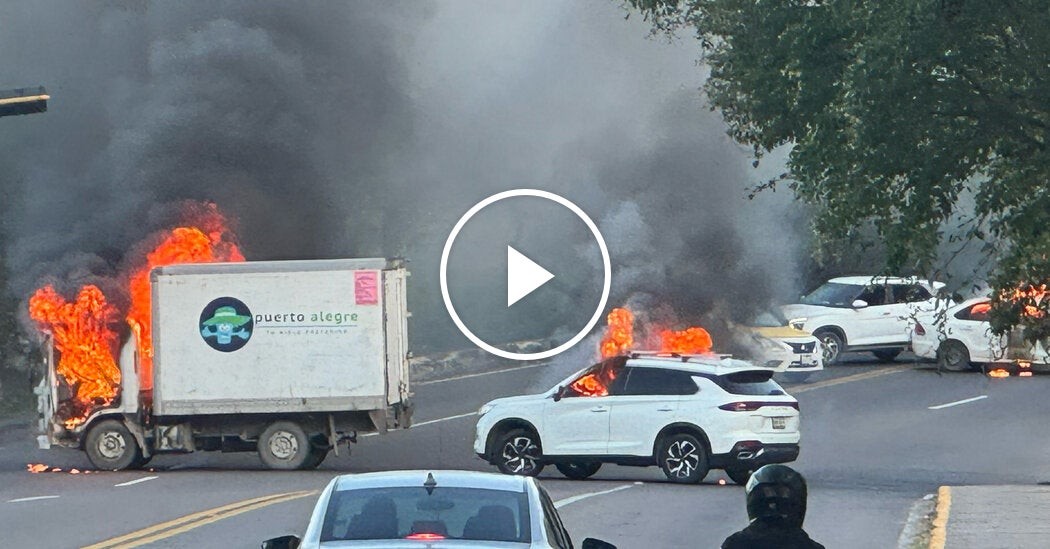
Recent unrest in Mexico was exacerbated by the rapid spread of false images and videos through social media, creating widespread panic among residents even as authorities remained largely silent. Witnesses report that fabricated content, including AI-generated images of burning buildings, fueled fear and confusion.
The Spread of Falsehoods
Eyewitness accounts detail how unverified claims of indiscriminate gang violence spread quickly. One resident described seeing a viral image of a local church purportedly set ablaze, an event that never actually occurred. Another individual noted that they initially believed Costco was on fire based on circulating footage, only to discover via drone reconnaissance that only vehicles in the parking lot were affected.
Direct Threats and Violence
The situation escalated beyond misinformation as some individuals directly experienced extreme violence. One person recounted being confronted at gunpoint by a man who demanded they exit their vehicle before throwing an incendiary device into the car, igniting it in flames. This real-life attack occurred alongside the wider climate of fear caused by false reports.
Lack of Official Information
The absence of timely, official statements from authorities further contributed to the chaos. Residents expressed frustration at being “in the dark,” relying on unverified social media posts for information while the actual situation remained unclear. This lack of transparency amplified the impact of false claims.
The combination of violent incidents and widespread misinformation created a dangerous environment where fear spread faster than verified facts. The incident underscores the potent threat that unverified content poses in unstable regions, where official silence can be interpreted as either negligence or deliberate deception.


